Showing posts with label 1920s. Show all posts

Sunday, January 14, 2018

Cane

9814533First published in 1923, Jean Toomer's Cane is an innovative literary work-part drama, part poetry, part fiction-powerfully evoking black life in the South. Rich in imagery, Toomer's impressionistic, sometimes surrealistic sketches of Southern rural and urban life are permeated by visions of smoke, sugarcane, dusk, and fire; the northern world is pictured as a harsher reality of asphalt streets. This iconic work of American literature is published with a new afterword by Rudolph Byrd of Emory University and Henry Louis Gates Jr. of Harvard University, who provide groundbreaking biographical information on Toomer, place his writing within the context of American modernism and the Harlem Renaissance, and examine his shifting claims about his own race and his pioneering critique of race as a scientific or biological concept.

*May Contain Spoilers*

Cane by Jean Toomer is a book unlike anything I've ever read before. This piece of literary modernism combines prose, poetry, song, and drama into a whole that is held together by theme. Though none of the characters in the novel are present all the way through, often only included in one chapter, Toomer presents them with reasons to like them, hate them, understand them, pity them, and even hope for them. In this way, the novel is almost like a set of introductions from which meaning can be taken only after meeting everyone present. 

The vignettes that Toomer offers are interesting, heartbreaking, and include themes of racial tensions, discrimination, magical realism, allusions to the bible, framed with beautiful imagery. After reading this book it's obvious why Toomer was called a writer before his time as his experimentation with style is incredibly unique and was probably a put off in the 1920s for most readers. Though this book does not have a unifying plot, the entire piece can be taken as a study of the way people treat people in the 1920s. I would highly recommend this book to those who enjoy reading something they've never read before, but are not afraid of controversial topics and historical viewpoints.

Rating: 3/5 Cups

Sunday, September 4, 2016

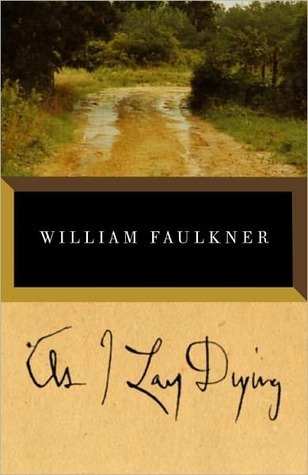
As I Lay Dying

77013At the heart of this 1930 novel is the Bundren family's bizarre journey to Jefferson to bury Addie, their wife and mother. Faulkner lets each family member, including Addie, and others along the way tell their private responses to Addie's life.

*May Contain Spoilers*

William Faulkner has always been a favorite author of mine. Especially since I studied at a college with a center dedicated to his works and had a few professors who taught his work in class. As I Lay Dying is one of Faulkner's best works and it's uniqueness is fresh and inspiring. In this book he utilized stream of consciousness writing, giving his narrators freedom to be themselves. As the mother of the Bundren family dies, her husband and children plan to fulfill their promise of taking her to Jackson to be buried. 

Each character has a bit about them that readers can relate to. Though they also have their faults and make a number of mistakes. Looking at Addie first, the mother, readers see that she was never a real loving person. She didn't enjoy motherhood and after she had given her husband enough children, she decided that she was ready to die. Anse, the father, is manipulative and uses his status as a poor man to guilt his neighbors into helping him. I suppose he tries his best, but he's a bit too selfish to be a real likeable character. 

The children are the characters that readers will relate to the most. Cash and Darl are the oldest. Darl fought in the war and struggles to accept his mother's death. Throughout the novel, he slides into insanity, suffering from schizophrenia. Readers will sympathize with his devastating experience of loss and its effects. Cash craves his mother's approval. Readers witness this as he makes his mother's coffin, holding each board up, silently asking if it's good enough for her. He also has some bad luck, breaking his leg halfway through the journey. Readers will certainly feel for Cash as the family lacks the empathy to care for him. Jewel is Addie's son from an affair and has a lot of anger for his mother. It isn't clear whether he knows of his father, but it is hinted at. Readers will understand his anger and also connect a little with Addie because she thinks of Jewel as the only child made of love. 

Dewey-Dell is the only daughter of the Bundren family and she's in a heap of trouble. This adds more conflict to the story and comments on female oppression during that time period. Dewey-Dell is pregnant and doesn't want to have the child. Her boyfriend, Lafe, gives her money to have an abortion but she struggles to find a doctor that will help her. She ends up getting tricked into having a sexual encounter with a pharmacy worker. Readers will have their own opinions of Dewey-Dell, understanding her predicament or disliking her for her choices and wants. 

Vardaman is the youngest Bundren, not wanting to accept that his mother is dead. He mentally turns her into a fish and pretends she's still alive. His rejection of the situation is saddening and no one offers him an explanation for what happened. He receives little comfort from his family. 

As the Bundren family makes their way from their farm to Jackson, they encounter many setbacks and bad luck. As I Lay Dying has a few odd twists and turns that will puzzle readers, implying that there's more to the story than first appears. A surface reading of this novel will not provide the proper interpretation. A deeper look is required. Readers who enjoy analyzing classic literature will enjoy tackling this one as it offers many different interpretations. 

Rating: 3.5/5 Cups

Monday, July 18, 2016

Indiana Belle (American Journey #3)

29922773Providence, Rhode Island, 2017. When doctoral student Cameron Coelho, 28, opens a package from Indiana, he finds more than private papers that will help him with his dissertation. He finds a photograph of a beautiful society editor murdered in 1925 and clues to a century-old mystery. Within days, he meets Geoffrey Bell, the "time-travel professor," and begins an unlikely journey through the Roaring Twenties. Filled with history, romance, and intrigue, INDIANA BELLE follows a lonely soul on the adventure of a lifetime as he searches for love and answers in the age of Prohibition, flappers, and jazz.

*May Contain Spoilers*

For the first time in the American Journey series, Geoffrey Bell has someone come to him about time travel in this third book, Indiana Belle by John A. Heldt. Someone who promises to help him gain more crystals and learn the location of the original time travelling cave. Yet, someone who can't promise to leave the past alone. 

Cameron Coelho is a twenty-first century man with nothing but his dissertation studies and his former girlfriend's father as a friend. It isn't the worst life, but it isn't the best either. When Cameron comes across a diary that speaks of time travel and a photo of a murdered woman, he goes all in. In doing so, Cameron became the man he was supposed to be. Readers will enjoy Cameron's character. He's passionate, caring, loving, intelligent, and a gentleman. The main connection between readers and Cameron will be his uncertainty about letting an innocent woman die... again. Readers will either think he should leave it be so he doesn't mess up the future or they'll think he should save her and take his chances. I rooted for saving her. Candice Bell is a humorous, talented journalist who loves adventure and spicing things up. 

Indiana Belle was an enjoyable novel. Evansville, Indiana provided a good even footed setting with enough good and bad to keep the story interesting. There was a nice twist at the end, which I found surprising. Though the idea had fluttered through my head, I didn't expect it. Also, this was the first time any of the characters had traveled to the future. I thought that was a nice enhancement, though it was freaky, as it should be I suppose. I wonder now if that's how the author imagines the future to be. It would be interesting to analyze it more thoroughly to see what current events may have influenced the description of the future. Heldt is a writer who is easy to read and easy to understand. Perfect for light summer reading. As a lover of time travel novels, I recommend this to anyone else who enjoys the genre. 

Rating: 3/5 Cups

Behind on the series? Read the reviews for books one and two!

Book 1     Book 2