Showing posts with label review. Show all posts

Sunday, June 3, 2018

Short Story Sunday - "Not Fair"

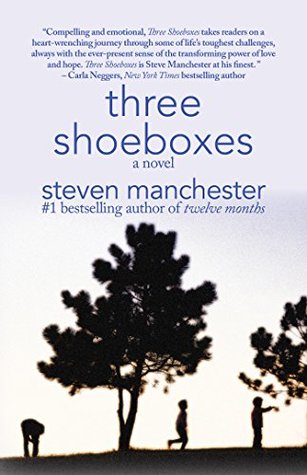
39671266"Not Fair" by Steven Manchester is a short story that works as a teaser for his novel, Three Shoeboxes. In this story, readers are introduced to Mac, a father struggling with severe anxiety. By reading this story before the book's release, I feel that there is a foundational connection with the main character. I haven't even started the novel yet and I already feel empathy and sympathy for Mac as he struggles to live his life without alcohol to ease his constant worry and fear.

Manchester also sets up conflict in this story as Mac's marriage and the relationships he has with his children are all strained by his anxiety. Through the story, Manchester demonstrates how close Mac and his wife were early on in their marriage. He then shows how much has changed which creates an emotional conflict that will undoubtedly be expanded upon in the novel. The struggle to connect with and be there for his children was the aspect of the story that hit me the hardest. This short story, a few pages about Mac taking his children to the county fair, presents a family falling apart. It succeeds as a teaser for the novel as readers of the short story hope that Mac can face his anxiety, share it with his family, and find a way to overcome it.


Synopsis for Three Shoeboxes:
Mac Anderson holds life in the palm of his hand. He has a beautiful wife, three loving children, a comfortable home, and a successful career. Everything is perfect—or so it seems. Tragically, Mac is destined to learn that any sense of security can quickly prove false. Because an invisible enemy called Post Traumatic Stress Disorder has invaded Mac’s fragile mind and it is about to drop him to his knees. He does all he can to conceal his inner chaos, but to no avail. Left to contend with ignorance, an insensitive justice system, and the struggles of an invisible disease, he loses everything—most importantly his family.

One shoebox might store an old pair of sneakers. Two shoeboxes might contain a lifetime of photographs. But in Three Shoeboxes, a father’s undying love may be just enough to make things right again.

(Access to this short story is available by signing up for Steven Manchester's mailing list.)

Monday, November 13, 2017

Short Story Sunday - Language of Thorns #6


34076952
When Water Sang Fire

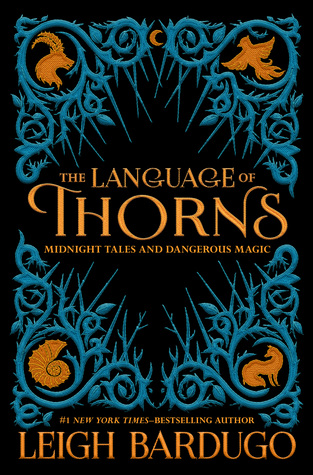
This story is the longest in Bardugo's collection, The Language of Thorns, and therefore provides the deepest character connections and the most intricate, magical detail. "When Water Sang Fire" is the story of a mermaid, Ulla, and her dearest (if only) friend, Signy. As mermaids, or merpeople, these special creatures have the power to sing magic into being. When they are young, Ulla and Signy learn that together they are the strongest singers in their colony. They can sing almost any magic into being.

The trouble with this story comes when Ulla and Signy are chosen by one of the princes, Roffe, to accompany him onto land for three months. During those three months, all of the princes are tasked with trying to win the kingdom by bringing the current king a gift from the mortal world. Roffe knows that his best chance at winning the title is with the help of Ulla and Signy. Though Ulla knows this, Signy's feelings for Roffe cloud her judgment. When Ulla realizes that bringing the current king fire would undoubtedly let Roffe win, she tries to find the right spell for it, but the cost is greater than what she thinks possible. Roffe does not agree and forces her to do it.

This short story seems like it may be Bardugo's prequel to "The Little Mermaid" stories, but in it, we learn about Ursula. This idea is mentioned in the author's note at the end of the book and the sadness and terror of this specific story are more than enough to drive someone good to become someone evil. "When Water Sang Fire" covers themes of love, friendship, ambition, and sacrifice. The main theme of love and friendship is borne between Ulla and Signy but is threatened by Signy's feelings for Roffe. The theme of ambition is shown to be a dangerous one as Roffe is willing to hurt others for his own gain. And the overwhelming feeling of sacrifice echoes hollowly after Ulla gives everything for Roffe and Signy but receives nothing in return. Though this is the longest and most in-depth story of the collection, I don't think it's my favorite, but I do think it'll be the one that haunts me. Its message is powerful and melancholy as it cries out that trust is not always deserved and is often morphed by betrayal.

Other Stories:

Sunday, October 22, 2017

Short Story Sunday - Language of Thorns #4

34076952
Little Knife


This is the story of how a once bustling town decayed into a decrepit haunt that everyone tries to avoid, as its curse could crawl away with any visitor.

Yeva, the main character, is a girl who only grows more beautiful with age. She is so beautiful that even friends would try to kidnap her. And though this may seem wonderful, for Yeva it is not. Eventually, she is too beautiful to leave her home without someone trying to take her or chaos breaking out in response to not having her. Her beauty works as a sort of spell to twist the will of anyone who sees her.

When she comes of age, Yeva's father creates a contest to win her hand in marriage.

Semyon is a Tidemaker, a member of the Grisha, and though he is very poor he decides he wants to marry Yeva. His powers to control water help him complete the initial task, but Yeva's father sets another because he doesn't want his daughter marrying anyone but a prince.

Throughout this 'contest' Yeva is focused on only one thing: how do these tests determine if the man will be a good husband? (Good question, sister!) I think it's this question that aligns the readers with Yeva. Through her repeated asking, readers realize that she doesn't really care about gold, or fancy food, or imported fabric. She's deeper than that. 

Semyon completes the second task but then comes a third and final trial. Again, Semyon achieves the task's goal but wonders if Yeva's father will just try to continue setting tasks or kill him after he hands over the prize. Semyon thinks he comes up with a plan to avoid this, but he underestimates the power of Little Knife, the river who helped him complete all of the tasks. It turns out he cannot control the water; the water had been using him to reconnect with its separate pools. The river takes Yeva away giving her a sense of freedom from being eagerly and relentlessly sought by men. 


This is my favorite story so far in this collection! I love that Yeva gets to voice her concerns and ultimately choose her self over the suitors that are only obsessed with her beauty. I did not expect her to be given the option to choose no-one and was both surprised and happy that she was. Though this story does have a twist, like all of the others thus far, it was of a different kind. Again, there was the theme of trusting someone/something that you don't really know, but this time it was for the main character's benefit.  I also really appreciated that Yeva wasn't taken in by her own beauty. Receiving that kind of attention could have turned Yeva into a selfish woman who only cared about the beauty of others and what they could give to her -- which was kind of demonstrated by her father -- but she didn't. She didn't fall prey to her own power. She remained a woman only concerned with how she would live her life and if she would marry a good man, not a rich or handsome man. Beauty has a been a troublesome characteristic throughout these stories and there's a recurring message that beauty isn't everything. There are more important things in life and for Yeva that was freedom. 

Next Story (Nov. 5th) - The Soldier Prince

Read about the first three stories:

Sunday, October 15, 2017

Short Story Sunday - Language of Thorns #3

34076952
The Witch of Duva

The monsters of Langauge of Thorns seem to always be closer than you think. In this short story, in the town of Duva girls start disappearing as winter begins. Whispers of a Khitka, a vengeful spirit, start sweeping the town. The main character is a young girl named Nadya. When her mother dies, a widow in town decides she wants to marry Nadya's father, Maxim. Karina, the widow, doesn't seem to like Nadya very much and the story takes the feel of the evil stepmother. Before their marriage, Karina warns Nadya that she must leave her home and her father. Nadya believes that it's because Karina doesn't want to have to take care of her through the winter. After they marry, Maxim starts to ignore Nadya, spending his time gambling, drinking, or with Karina. 


With the seeming goal of getting rid of Nadya, Karina begins sending Nadya to the woods each day to check the traps for food. One evening, Nadya gets lost in the woods and meets Magda. Nadya learns that Magda mixes tonics and potions for people who need them as the Witch of Duva. Yet, Nadya stays with Magda instead of returning to her home. For the price of two fingers, Magda helps Nadya make her home safe for her return. But again, like many of Bardugo's stories, the monster isn't the one readers have been led to believe. Nadya learns that her father was responsible for the disappearing girls. After her father's death, Nadya continues to live with the witch, learning potions and tonics, deep in the woods.


This story, like the two before, shares the message that what you think about people isn't always the truth and those you trust may not be trustworthy. However, the end of this story is a bit more disturbing than the others. It seems in the Grishaverse, monsters are always hiding in sheep's clothing which brings to focus the overarching theme of danger hiding in the least likely of places. One thing that I like about these stories is that many of the character's motives and goals are unpredictable. I like that Bardugo offers twists in her stories through both action and characters. I'm also starting to notice that none of the parents in any of these stories are good. They don't seem to actually care about their children or something causes them to stop caring. There is also the reoccurring instance of the main character being female (in the first story and this story) causing me to wonder if the morals of these stories are gender-focused.  We'll see if these patterns continue in the final three stories.

Next Story: Little Knife

Read about the first two stories:

Sunday, October 1, 2017

Short Story Sunday - The Language of Thorns #1


34076952

Ayama and the Thorn Wood


A monstrous son is born. A king builds a maze to keep him trapped. Yet, he escapes. 

The village people suffer and no one is able to stop the monster.

A family ashamed of one of their daughters sends her to be a messenger with the beast in hopes that they'll become rich and the monster will stop terrorizing the town, or at least be rid of their daughter.

Ayama is the main character of this opening short story of The Language of Thorns. She's a girl who wasn't born as beautiful as her sister and is therefore ostracized by her family. She is treated like a servant, forced to sleep in the kitchen, covered in ash and responsible for all of the chores. She's silenced by her family until she almost forgets how to speak. Yet, she's the only one in the village who will try to face the beast, speak to him, and try to save the town. It's when she reaches the monster that her voice is revealed, as well as her sharp tongue, quick wit, and honesty. The fact that these character traits are all revealed under duress show Ayama's bravery and courage. It also shows that these traits can be found in unexpected people. It reminds me of the old adage, don't judge a book by its cover. Because we can't judge a person based on their looks. It's their personality, their characteristics that matter. Just as Ayama proves in this short tale. 

When she arrives at the wood, the beast demands she tell him a story in exchange for her life. She adds truth to a fairy tale and he lets her leave unharmed, promising to leave the town's livestock alone. Her family is rewarded but Ayama is still treated like a servant. No one cares about her, only about their own freedom from the monster. Until it seems that he has returned to continue his terrorizing. So Ayama is once again sent to the woods.  

She once again must trade a story for her life. She again adds truth to a fairy tale and survives, saving the village yet again. A village that didn't care for her. A village that was too afraid to face the monster a young girl could face. But saving the village wasn't enough for the King. He sent her back to the monster with a specially crafted knife with orders to kill him. Ayama returns and tells him another story and she finds out the truth behind the King's accusations and the village's torment. 


In the end, truth prevails and the true monsters of the story are punished while those who look like monsters, but aren't, are rewarded. This opening tale of The Language of Thorns sets the tone for this collection of short stories as honest and representative of the cruelty sometimes found in leadership, the selfish nature of humanity, and that things aren't always as they appear. Though this story had a happy ending, we'll see if that continues over the next few weeks. The power of this opening story has me really excited to see what power the following stories have. 

My favorite part about this short story is that Ayama saves her own life by telling a story, a fairy tale, but with truth added to it. And by truth, I mean realistic outcomes. She removes (part of) the fantasy of the fairy tale and exchanges it for something she has learned from her own life. This adds a sadness to the story but also twists it to make it true for the monster. This act gives the story, and the art of storytelling, power. It demonstrates that sometimes storytelling, or sharing, can provide peace and save a life. 


Next Week: "The Too-Clever Fox" 

Friday, September 29, 2017

Short Story Sundays - New Review Series

Yesterday I drove to D.C. to visit the bookstore, Politics and Prose, and to pick up my copy of Language of Thorns, a short story collection by Leigh Bardugo.

It was incredibly crowded and I'm on the short side of tall, so I got a little lost in the room. But, regardless, I had an absolute blast.

Admittedly, it was my first book signing, so I have nothing to compare it to. Still, an absolute blast. While I was there, listening to Ms. Bardugo speak about characters, plots, and planning (all things I found riveting) I had an idea. Instead of reviewing the book in its entirety, I should do a series!

There's no reason not to review this new short story collection as short stories so I'm very excited to present the tentative dates for this new review series. The first of its kind here at The Coffee Pot Review. And hopefully the start of something more!


October 1st - Ayama and the Thorn Wood

October 8th - The Too-Clever Fox

October 15th - The Witch of Duva

October 22nd - Little Knife

November 5th - The Soldier Prince

November 12th - When Water Sang Fire

This will be the schedule I'll follow for reviewing these short stories. I plan on focusing on characters, theme, and overall feel. If you want to join me in reading these fantastical stories each Sunday for the next seven weeks (with one break) please do! I'm so excited to bring this new type of review series to The Coffee Pot and I hope you'll all share what you think of the stories with me as we go! 


Friday, June 16, 2017

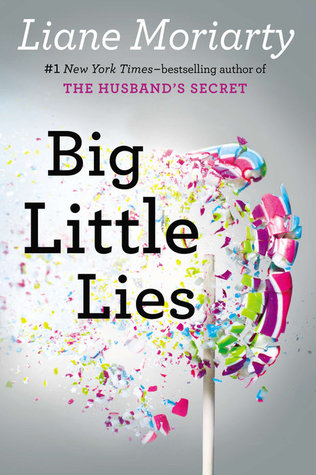
Big Little Lies

19486412Big Little Lies follows three women, each at a crossroads:

Madeline is a force to be reckoned with. She’s funny and biting, passionate, she remembers everything and forgives no one. Her ex-husband and his yogi new wife have moved into her beloved beachside community, and their daughter is in the same kindergarten class as Madeline’s youngest (how is this possible?). And to top it all off, Madeline’s teenage daughter seems to be choosing Madeline’s ex-husband over her. (How. Is. This. Possible?).

Celeste is the kind of beautiful woman who makes the world stop and stare. While she may seem a bit flustered at times, who wouldn’t be, with those rambunctious twin boys? Now that the boys are starting school, Celeste and her husband look set to become the king and queen of the school parent body. But royalty often comes at a price, and Celeste is grappling with how much more she is willing to pay.

New to town, single mom Jane is so young that another mother mistakes her for the nanny. Jane is sad beyond her years and harbors secret doubts about her son. But why? While Madeline and Celeste soon take Jane under their wing, none of them realizes how the arrival of Jane and her inscrutable little boy will affect them all.

*Contains Spoilers*

Liane Moriarty defines the oxymoronic title of her novel, Big Little Lies, with the story of three women whose lives crash into each other, creating chaos that will underscore just how big little lies can be. 

The synopsis of this novel pretty much sums up the characters that play the larger roles in this novel, yet each of the three women have secrets that come spilling out, one drop at a time, connecting them to the reader. Though this book is about mothers of young children, there is such a larger dynamic force at work here that will surprise readers. As HBO has recently released the show that is based on this book, I already knew, roughly, what would happen in the novel. However, the book (per usual) goes into much more detail about the character's feelings by providing their point of view and even a little stream of consciousness writing. 

Madeline's character is much more likeable in the novel than in the show. I hate to make comparisons but it's true. Readers get a better in-depth look into what drives her. And, essentially, that is the fact that her ex-husband Nathan called it quits right after their daughter was born. That betrayal has scarred Madeline and she has vowed that she will never forgive him, even though she is remarried to a seemingly great husband, Ed, and has two more children. Readers will connect with Madeline, as they will with all of the characters, emotionally. Madeline is prompted into action by her emotions, whether they be anger or loyalty or love. 

Celeste and Jane are the main secret keepers of the cast of characters. Celeste has a life that seems perfect from the outside, but she's in love with a man (spoiler alert) that cannot control his anger. His abuse grows and evolves as the novel progresses, reaching a point where Celeste actually begins to believe he may kill her. Through Celeste, readers get an inside look at a relationship that is toxic and bruised by physical abuse. It's difficult to understand how someone would stay in an abusive relationship, but Moriarty does a fantastic job at relaying all the different facets of information that can go into making that decision. The answer to an abusive relationship isn't black or white. Like life, it's full of different hues of gray. As Celeste weighs her options and begins planning for a life without her abusive husband, readers will see how her mind works, the thoughts and feelings that push her to stay as well as the ones that make her want to escape. 

Jane has just moved to the area of Australia in which this story takes place with her son, Ziggy. She has a dark secret as well and that is that Ziggy is the result of a semi-violent one night stand. This experience has scarred her and she can't seem to move past it. However, as she finds new friendships with Celeste and Madeline, readers will see how Jane begins to heal. Readers will also see how much of an impact that this one night had on Jane's psyche as she struggles with an eating disorder and her self-esteem. 

As I said, readers will connect with these characters emotionally, but the main plot of the novel is set up as a frame. It is introduced early on that there was a death, a murder, at the school trivia night. As the novel progresses from six months before the incident, readers learn the ins and outs of the school and its hierarchy as well as witness the intricacies and selfish natures of the school parents. Through the revelation of secrets, the list of possible people who could have been murdered grows substantially to involve all of the main characters. And for those who have seen the show, the deceased is the same person, yet, the tumultuous situations that lead the characters to the balcony are more fully described and there is no cliffhanger ending of keeping the truth away from the police. Big Little Lies is truly a complicated network of cause and effect that culminates in a powerful statement about bullying, abuse, and violence in general. I would recommend it to anyone who enjoys mystery with a large amount of drama and in-depth character analysis. 

Rating: 4.5/5 Cups

Friday, November 18, 2016

Naked Lunch

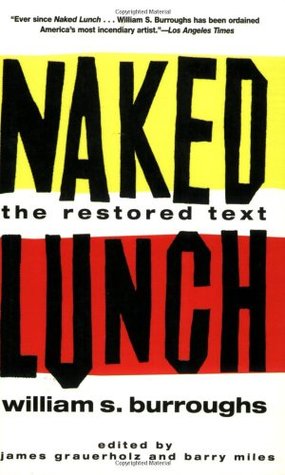
7437Naked Lunch (sometimes The Naked Lunch) is a novel by William S. Burroughs originally published in 1959. The book is structured as a series of loosely connected vignettes. Burroughs stated that the chapters are intended to be read in any order. The reader follows the narration of junkie William Lee, who takes on various aliases, from the US to Mexico, eventually to Tangier and the dreamlike Interzone. The vignettes (which Burroughs called "routines") are drawn from Burroughs' own experience in these places, and his addiction to drugs (heroin, morphine, and while in Tangier, "Majoun"—a strong marijuana confection—as well as a German opioid, brand name Eukodol, of which he wrote frequently).

The novel was included in Time magazine's "100 Best English-language Novels from 1923 to 2005". In 1991, David Cronenberg released a film of the same name based upon the novel and other Burroughs writings.

*May Contain Spoilers*

Naked Lunch, by William S. Burroughs, is definitely the most disturbing book I have ever read to date. It was written in the Counterculture Movement when many people were rejecting the American Establishment. They had had enough. Burroughs was one such person. He was friends with a few of the Beat Authors, specifically Allen Ginsberg who helped him get this novel published. 

Burroughs was addicted to drugs for many years. During this time, he wrote these vignettes about drugs, society, sex, art, and more. The novel doesn't have a clear plot line and Burroughs actually said that the pieces could be read in any order. There are certain characters that pop up repeatedly in different sections but the world, Interzone, is so alarming and terrifying that it's hard to form a connection with any of the characters. Except perhaps the ones being harassed by the doctor. Dr. Benway is utterly insane and it's easy to connect with his patients, who also think he's insane. 

The most intriguing thing about this book is the hidden meaning. Burroughs used metaphor, allegory, and allusion to create a world symbolically in tune with the reality of the 1960s and 70s. He challenged the viewpoints of American politics, global war, drug addiction, homosexuality, and sex itself. The world that he saw was harsh and horrible and he put that into his writing. Naked Lunch is held in high esteem in the literary world because of it's risky and controversial nature so I would recommend it, but only to those who have a strong stomach. 

Rating: 2.5/5 Cups

Tuesday, November 15, 2016

The Portable Beat Reader

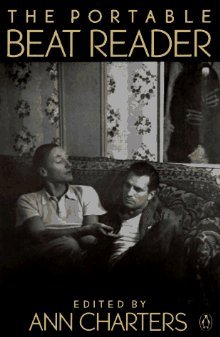
534647Beginning in the late 1940s, American literature discovered a four-letter word, and the word was "beat." Beat as in poverty and beatitude, ecstacy and exile. Beat was Jack Kerouac touring the American road in prose as fast and reckless as a V-8 Chevy. It was the junk-sick surrealism of William Burroughs, the wild, Whitmanesque poetry of Allen Ginsberg, and the lumberjack Zen of Gary Snyder. "The Portable Beat Reader" collects the most significant writing of these and fellow members (and spiritual descendants) of the Beat Generation, including Neal Cassady, Gregory Corso, Diane DiPrima, Bob Dylan, Leroi Jones, and Michael McClure. In poetry, fiction, essays, song lyrics, letters, and memoirs, it captures the triumphant rudeness, energy, and exhilaration of a movement that swept through American letters with hurricane force.

*May Contain Spoilers*

Surprisingly, out of everything I've read, I had never read anything from the Beat Movement before this. It was a time of rebellion and rejection of conformity mixed with experimentation of style in both writing and life. The Portable Beat Reader is a collection of essays, novel excerpts, and poems that really summarizes the Beat Movement. 

For the most part, I loved the work. I know it made a huge splash in the 1940s and 50s, but I think it's still relevant to today's society. There is still controversy over some (most?) of the topics the Beat authors wrote about and it makes the work feel timeless. A bit of a warning seems prudent here: Yes, some of the pieces are a bit offensive, some were seized for obscenity upon publication. I think this adds to the importance of the rebellious tone these authors took.

I really enjoyed how the book was about more than just Jack Kerouac, Neal Cassady, and Allen Ginsberg. These names hold weight, but they weren't the sole members of the Beat Generation. It was, in fact, a generation with many contributors. Gregory Corso, Diane di Prima, and John Clellon Holmes were three writers who really stood out to me. With themes that range from sexuality to war to stereotypical expectations of society, these authors challenged it all.

For readers who have never read anything from the beatnik authors, but are interested in this idea of writing a rebellion, I highly recommend The Portable Beat Reader. It's a strong collection that offers the history of the era, short biographies of the authors, and the works themselves. 

Rating: 4/5 Cups

Wednesday, November 2, 2016

Poetry of WWI and WWII

A Treasury of War Poetry: British and American Poems of the World War 1914 - 1917

11682574

This book contains poetry from numerous countries all centered around the subject of war. Primarily British and American poems dating from 1914 to 1917 have been collected in this edition by the editor George Clarke. The subject matter of these poems encompass patriotism, courage, self-sacrifice, enterprise, and endurance. Authors included are V Lindsay, Galsworthy, Kipling and others.

***

Interesting collection of various country's poetry about WWI. With the poems either siding with patriotism or trauma, the book gives a well-rounded account of the war. It even included poets who fought on the frontlines as well as women who worked as nurses or sent their sons off to fight. There were a few well known poets intermingled with poets who I had never heard of before.


Poets of World War II

279441

Acclaimed poet and World War II veteran Harvey Shapiro's pathbreaking gathering of work by more than sixty poets of the war years includes Randall Jarrell, Anthony Hecht, George Oppen, Richard Eberhart, William Bronk, and Woody Guthrie.

***

This book creates a stark contrast between WWII and WWI poetry. Most of the poets who are included in this anthology were members of the military and that fact alone gives readers an emotional connection. Whereas WWI poetry was more patriotic and focused on bravery and honor, WWII poetry is heavy in the theme of death. The poets are blunt, realistic, and honest in their fears. Reading this poetry was akin to hearing stories from war veterans. It's moving in a way that is also terrifying.


Rating: 3/5 Cups

Thursday, September 15, 2016

The Beast in the Jungle

10400601Henry James's devastating and profoundly moving novella is the story of John Marcher, a man who, for as long as he can remember, has been obsessed by the feeling that some life-changing - even catastrophic - event lies in wait for him like a jungle animal. Then the tragic day arrives on which the terrible true nature of the beast is revealed.

*Contains Spoilers*

Henry James writes a new telling of Narcissus, the mythic god, in his novella, The Beast in the Jungle, but in the form of a man. John Marcher knew from a young age that something horrendously terrible would happen to him someday. He finds a friend in May Bartram who he tells his secret to. As life goes on, they wait for the creature to reveal himself. 

John echoes Narcissus in many ways throughout this short tale. He's only concerned with himself and his beast, he uses May to breathe life into his fantasies, and has grand ideas and designs about himself. John falls in love with the idea that there's a monstrous thing waiting for him, singling him out, making him more special than anyone else. However, the beast isn't what he thinks. 

May Bartram is a good friend to John, always putting up with his wild claims. But it's more than than, she believes him, and I think she has a reason to believe him. It's insinuated that May knows what the beast is and I think for most of the novella, even most of her life, she did know. May gets sick about halfway through the story and John thinks that watching her die may be the beast. Though he's on the right track, he doesn't exactly have the truth of it. 

John is such a selfish person that readers will have trouble feeling bad for him as he watches his friend die. Though it isn't as if he cries and exhibits true feelings about it -- he's actually angered that they can't talk about his beast. He's upset because after May dies, he'll have no one to discuss his beast with, no one to feed his fantasies. 

However, a surprising turn of events transpires as May tells John before he dies that the beast has already struck. The realization of what the beast actually was does draw out sympathy for both characters. When John learns of what form the beast took, it is horrifying and sad and terrible -- because he missed his chance to live a life full of love and passion with May. 

As a lover of literature, I recommend this short novella to anyone who also enjoys classics and psychological analysis of characters.

Rating: 3/5 Cups

Sunday, September 4, 2016

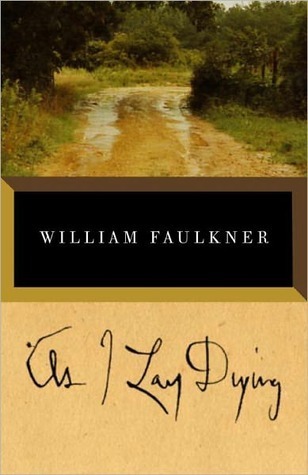
As I Lay Dying

77013At the heart of this 1930 novel is the Bundren family's bizarre journey to Jefferson to bury Addie, their wife and mother. Faulkner lets each family member, including Addie, and others along the way tell their private responses to Addie's life.

*May Contain Spoilers*

William Faulkner has always been a favorite author of mine. Especially since I studied at a college with a center dedicated to his works and had a few professors who taught his work in class. As I Lay Dying is one of Faulkner's best works and it's uniqueness is fresh and inspiring. In this book he utilized stream of consciousness writing, giving his narrators freedom to be themselves. As the mother of the Bundren family dies, her husband and children plan to fulfill their promise of taking her to Jackson to be buried. 

Each character has a bit about them that readers can relate to. Though they also have their faults and make a number of mistakes. Looking at Addie first, the mother, readers see that she was never a real loving person. She didn't enjoy motherhood and after she had given her husband enough children, she decided that she was ready to die. Anse, the father, is manipulative and uses his status as a poor man to guilt his neighbors into helping him. I suppose he tries his best, but he's a bit too selfish to be a real likeable character. 

The children are the characters that readers will relate to the most. Cash and Darl are the oldest. Darl fought in the war and struggles to accept his mother's death. Throughout the novel, he slides into insanity, suffering from schizophrenia. Readers will sympathize with his devastating experience of loss and its effects. Cash craves his mother's approval. Readers witness this as he makes his mother's coffin, holding each board up, silently asking if it's good enough for her. He also has some bad luck, breaking his leg halfway through the journey. Readers will certainly feel for Cash as the family lacks the empathy to care for him. Jewel is Addie's son from an affair and has a lot of anger for his mother. It isn't clear whether he knows of his father, but it is hinted at. Readers will understand his anger and also connect a little with Addie because she thinks of Jewel as the only child made of love. 

Dewey-Dell is the only daughter of the Bundren family and she's in a heap of trouble. This adds more conflict to the story and comments on female oppression during that time period. Dewey-Dell is pregnant and doesn't want to have the child. Her boyfriend, Lafe, gives her money to have an abortion but she struggles to find a doctor that will help her. She ends up getting tricked into having a sexual encounter with a pharmacy worker. Readers will have their own opinions of Dewey-Dell, understanding her predicament or disliking her for her choices and wants. 

Vardaman is the youngest Bundren, not wanting to accept that his mother is dead. He mentally turns her into a fish and pretends she's still alive. His rejection of the situation is saddening and no one offers him an explanation for what happened. He receives little comfort from his family. 

As the Bundren family makes their way from their farm to Jackson, they encounter many setbacks and bad luck. As I Lay Dying has a few odd twists and turns that will puzzle readers, implying that there's more to the story than first appears. A surface reading of this novel will not provide the proper interpretation. A deeper look is required. Readers who enjoy analyzing classic literature will enjoy tackling this one as it offers many different interpretations. 

Rating: 3.5/5 Cups

Tuesday, February 16, 2016

Raining Embers (Order and Chaos #1)

25784271Palmer Tash always follows the path of least resistance. He has an unusual disability involving his hearing. But in theocratic Latysia, being different isn’t a good thing, so he conceals his problem.

Brier Chastain’s malady is even more debilitating, and she often must take to her bed for long periods. Her days are spent in meaningless pursuits as she awaits an arranged marriage.

When Palmer and Brier are kidnapped on the same night, they meet and discover that their so-called disabilities are actually budding powers. They are the incarnations of Order and Chaos. With their country on the brink of war, the two must step into their predestined roles and learn to take control of their own destinies.


*May Contain Spoilers*
 
Jessica Dall incarnates concepts, or gods, in her novel, Raining Embers, a fantasy adventure of self-discovery. Palmer and Brier are young adults who each have no idea who they really are. With odd quirks and abilities, the two are certainly misfits, but when they are brought together and trained... the two become whole.
 
Brier is the embodiment of "Chaos," nothingness. The real Brier died at the age of five in a horrible fire and Chaos took over her body, continuing her life as if nothing happened. She's incredibly powerful and with proper focus and training, she can destroy anything. She's kidnapped by the Goebel family to be used as a weapon. Brier is a character who survives. She's tough, caring, and beyond understanding. Readers will watch as Brier learns of her power to destroy and instead of letting it consume her, she fights to stay level and try to do what's right. Though when  once-trusted people are trying to control and contain Chaos, it can't possibly end well.
 
Palmer is the embodiment of "Kosmos," everything. He has the power to become omniscient, to hear and know everything. The real Palmer died at the age of six, when he drowned in the river escaping the fire that killed Brier. It doesn't seem to be a coincidence that Brier is fire and Palmer is water, as water puts out flames, Palmer learns that he can help Brier control her destructive abilities. He balances out Brier. Palmer is an intelligent character who doesn't often think of the world around him. He came to ignore his powers once he realized that they weren't normal. When he embraces them, Palmer can see visions, hear anything, and communicate with Brier telepathically. Readers will like Palmer as he is the protector.
 
The plot of Raining Embers is journey-esque. Palmer and Brier are forced to acknowledge their powers after they are kidnapped and trained by the Goebel's. Along this journey they meet Rosette, a very little girl who has the power to make anyone sick in anyway she wants. The three characters join together and escape the Goebel's. As they make their way back home, Palmer has a vision that they're headed for war and darkness. The adventure of these three is entertaining, heart warming, and intriguing. Readers will enjoy the detailed account of Chaos and Kosmos, and hope that the characters don't lose themselves to their abilities.
 
Rating: 4/5 Cups