
Once the doyenne of Long Beach and now a sick old man, Frank’s dying wishes lay in the hands of an overbearing carer. Mike refuses to embrace modern fads like gay marriage, preferring the past when gay men really had something to fight about. John secretly places an ad in The Farmers Journal looking for a companion as his father organises local farmers in political protest. In a Belfast hospital, Conor confesses to his dying father that he intends to marry his flatmate. Ciarán responds to John’s ad in The Farmers Journal but finds his search for love overshadowed by the search for a neighbour's missing child. The demolition of Ballymun flats forces Scott into making some life decisions, including embarking on an affair that threatens to destroy him. Teenage Traveller Ritchie discovers a glorious world of online dating is just a click away.
From the wind-scrubbed West of Ireland to the manicured lawns of the East, gay men are searching for their place in a modern Ireland. These gritty and confessional stories fuse their characters' voices into forceful narratives, connecting them by a few degrees of separation, an improved road or a new broadband connection.
*May Contain Spoilers*
R. E. Kemp shares the stories of ten homosexual men living on the isle of Ireland in his novel, In Pursuit. As the novel progresses, each chapter is a different character, beginning with the oldest and ending with the youngest, and each gives a new perspective on life as someone who is unaccepted.
Mike, Cathal, and Conor are the three characters who have partners. Mike is disabled and grew up fighting for gay rights in the 1980s. He's a homebody with a loner attitude whose brother fights for marriage equality.
Cathal is dating a famous athlete who comes out in an interview, forcing Cathal to tell his family about his sexuality. They surprise Cathal when they support his relationship but he feels defeated when he discovers that his family just wants to be associated with someone famous.
Conor's father is in the hospital when he reveals that he will be married to his partner Fergus. It's a touching moment when his father promises that he'll be at the wedding though his sister doesn't condone his "behavior."
Frank is the oldest character and is dying of (though this is only hinted at in the novel) AIDS. He's cared for by his neighbor who is kicked out when his daughter appears to "fix" him. Though he's fussy, delusional, and forgetful, readers will empathize with him and how his daughter can't stand to have him for her father.
Ger is a character who's story is also heartbreaking. He's with his family, celebrating his sister's wedding, and all he can think about is how his partner just died from a brain tumor and no one around him knows. He worries that his family won't understand and Ger doesn't want to draw attention away from his sister. All he wants to do is make his family proud and readers will undoubtedly connect with him.
Jackie is a divorced father who finds love in promiscuity. He meets younger men and grows tired of them quickly. If readers have a hard time connecting with any of the characters, I think it will be Jackie as he seems to have different aspirations than the others.
John and Ciaran's stories are briefly shared. While John starts that plot of their romance, Ciaran finishes it later in the book. John puts an ad in the paper for a male friend though his family doesn't know that he's homosexual. He dreams of building a life with someone he loves and Ciaran sees the ad. Ciaran has a deaf brother and spends most of his time alone. His mother is mostly absent while Ciaran's father is abusive. He finds acceptance and love with John. These two stories coming together gives readers a chance to see that love has the same power no matter the sexuality.
Scott and Ritchie are the youngest characters and provide the ending stories in the book. Scott lives in a building that is about to be torn down. He is terrified of coming out, and for good reason, as his brother and father beat him up because they know he's gay. He decides to show his true nature regardless, breaking up with his girlfriend and dating a new guy that is tender and caring. Readers will see strength in Scott and respect him for being true to himself.
Ritchie is a member of a criminal family and goes to an online dating site so that he can be anonymously gay, as his family will murder him if he comes out. Readers watch as Ritchie finds a chance at love though the danger of the situation keeps him from completely accepting it.
Each character of In Pursuit shares a common dream or goal. They want to find happiness, love, and acceptance. As readers explore each new story, they will see a glimpse of what life is like for an Irish homosexual. Though this seems a small niche in c
omparison to the world, I think at least one character will resonate with each reader, no matter their sexuality or location.
Rating: 3/5 Cups

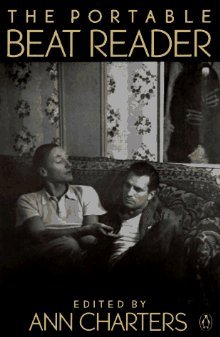 Beginning in the late 1940s, American literature discovered a four-letter word, and the word was "beat." Beat as in poverty and beatitude, ecstacy and exile. Beat was Jack Kerouac touring the American road in prose as fast and reckless as a V-8 Chevy. It was the junk-sick surrealism of William Burroughs, the wild, Whitmanesque poetry of Allen Ginsberg, and the lumberjack Zen of Gary Snyder. "The Portable Beat Reader" collects the most significant writing of these and fellow members (and spiritual descendants) of the Beat Generation, including Neal Cassady, Gregory Corso, Diane DiPrima, Bob Dylan, Leroi Jones, and Michael McClure. In poetry, fiction, essays, song lyrics, letters, and memoirs, it captures the triumphant rudeness, energy, and exhilaration of a movement that swept through American letters with hurricane force.


