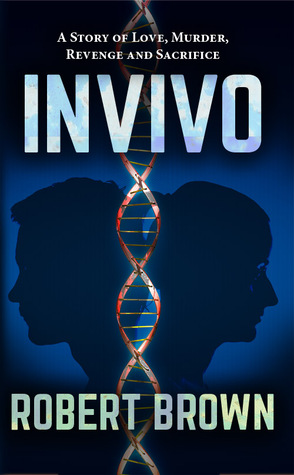
 It is spring, 1996 in a small university town on the east coast of Scotland. Harold Spencer, MD, PhD is in the middle of a bold experiment to cure genetic disease. Opponents say he is going too far and too fast; yet he is driven to end the heartbreak of parents and the early end to so many lives. The breakthrough he has sought is within reach. He and his wife Shelly are also beginning what they call the gala fortnight, celebrating their birthdays and wedding anniversary. Yet destruction lurks, within the town and within his own lab. Invivo is a love story. And a story of evil, revenge, and remorse where only the ultimate sacrifice can help keep a promise.
*May Contain Spoilers*
Robert Brown pens an interesting story revolving around research, trials, and error. Invivo shares the murder of a beloved wife and how her husband takes matters into his own hands, as a sweet suicidal scientist who dreams of death and revenge. Readers will witness, with jaws dropped and a sense of disbelief, Harold Spencer's dive into what seems like madness.
Shelly Spencer is a kind, big hearted, loving character. Her image is that of a perfect woman who is deeply in love with her husband and dreams of having a family. Readers will be horrified at what is done to Shelly by Herrie the Fisherman. She's murdered in the most heinous way and the description itself gave me the chills. I almost had to skip it and kind of wish I would have. Readers will feel saddened and angry at Shelly's unfair outcome. Those feelings will help readers connect with her husband, Harold, and understand his debilitating grief.
Dr. Harold Spencer wants to save the lives of people who have been dealt deadly genes. His research goals are commendable and he's easily respected. Harold is an understanding, nice, intelligent scientist who focuses mainly on curing cystic fibrosis. His scientific plan is to prompt mother nature to choose the better genes when given the option between dysfunctional DNA and healthy DNA. The research seems promising, but always ends in the death of his lab rats. When he finds his wife brutally murdered, Harold's whole world burns to the ground. Readers see Harold crumbling and will feel a strong sympathetic connection. For those readers who have lost a loved one, especially a spouse, the connection will be even stronger. However, Harold's character doesn't seem mentally stable and exhibits extremely distressful signs. I feel sympathy for his character and understand his depression, but I honestly don't know how to feel about what he carries out toward the end of his life. Mainly, the creation of his 'daughter'.
Holly Spencer is the biologically created daughter of Harold and Shelly that appears at the end. The way that Holly is created made me a bit uncomfortable, but aside from that, I liked her character and her role. She became the successful end result of Harold's human study combined with his unsteady sanity. I'm not sure all readers will understand Holly but she's does have relatable characteristics. She's smart, stable, and brave as she tries to find where she fits in the world, knowing that her life is going to consist of merely weeks.
The plot of Invivo is outside the realm of any science fiction I've ever read before. It begins with the introduction of the Spencers and how wonderful their life is before Shelly is murdered. Then Harold becomes determined to find her murderer, only living for his research and her justice. When his lab is burned down by an animal rights group, Harold loses one of his reasons to not commit suicide. Then he remembers he has a sample of his wife's DNA and decides to make his research even more personal. He injects himself with her DNA combined with specific hormones in order to begin the ending of his life. Through this therapy, Harold dies and gives creation to Holly. Invivo follows the denial and grief of one scientist who steps outside of the realm of study. As this book has brutal descriptions of sexual assault and murder, I would not recommend this to everyone. Readers of science fiction, murder mysteries, and those with an ability to understand some scientific processes (that are pretty well explained) would probably be entertained by this novel.
Rating: 2.5/5 Cups