Showing posts with label 1960s. Show all posts

Wednesday, December 6, 2017

What's Next, Wednesday (83)

  •  To play along share a book you've been looking forward to reading, whether it's new or has been on your reading list for a while.

348273

I'm looking forward to...

Under the Feet of Jesus by Helena Maria Viramontes. This book about an immigrant family living in California during the 1960s is on my class reading list so it's up next on my reading list. This book came out in 1995 so I'm wondering if any of you have read it? If you did, let me know what you thought of it. I'm looking at this book from a feminist perspective and how the author represented the immigrant family. 

Thursday, December 8, 2016

Poems from the Women's Movement

6376233A volume of top-selected works representing definitive modes of thought during the women's movement of the 1960s, 1970s, and 1980s is a collection that includes pieces by such writers as Adrienne Rich, Muriel Rukeyeser, and Judy Grahn.

**

Edited by Honor Moore, Poems from the Women's Movement is an anthology of work that spans three decades. The poems within tackle the injustices that women felt during their move for equality. Various poems cover themes of acceptance, sexuality, womanhood, marriage, legal and reproductive rights, and even take certain political stances. 

These poems are a powerful testament to the cacophony of voices that pushed for change. Sylvia Plath, Marge Piercy, Alta, and Audre Lorde are just a few of the poets found within these pages. Readers will be transported back to the time when women were discriminated against for rejecting the societal expectations while bearing witness to the fear of rape, beatings, and being forced into marriage. 

Peircy's "Rape Poem" is one of the darkest in the novel and strikes a chord with readers today when she writes "There is no difference between being raped / and being bit on the ankle by a rattlesnake / except that people ask if your skirt was short / and why you were out alone anyhow" (lines 7-10, p.59). As this still occurs today, this poem is relevant to contemporary readers. 

Many other poems are just as relevant to today's society with women's issues still being fought for. Readers may feel understood, inspired, or fearful as they traverse the decades of the women's movement through this collection. It provides a unique perspective of this time period and gives a good sense of what the movement was striving for. 

Rating: 3.5/5 Cups

Thursday, February 4, 2016

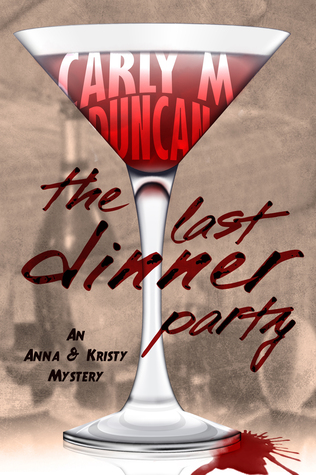
The Last Dinner Party

26881131When Jeanie D'Alisa is found murdered in her bedroom after hosting a dinner party in her home, detectives Anna Cole and Kristy Hicks are called to investigate the crime. Known within her community for her generous, yet unpredictable nature, Jeanie's secrets unfold as family, friends and neighbors become suspects. Anna and Kristy discover stamped passport pages revealing travels unknown and a curious relationship between Jeanie and the charming salesman who frequents the apartment building.

Meryl, Jeanie's devoted and needy friend, further complicates the investigation when she phones Jeanie's sister who is studying abroad and lies to her about the cause of death. Through a muddied pool of misdirection and betrayal, will Anna and Kristy be able to assemble the clues in order to bring Jeanie's killer to justice? The path to solving the mystery becomes tangled with faces of loved ones who are revealed to be foes in this story about the lengths people will go to in order to save themselves.

*May Contain Spoilers*
 
An apartment community is shocked when one of their neighbors is murdered after throwing her monthly dinner party in Carly Duncan's The Last Dinner Party. Though Jeanie wasn't perfect, she was loved and enjoyed by her neighbors for her entertaining nature and friendly demeanor. But someone did indeed strangle Jeanie and it's up to Kristy and Anna to wade through the drama.
 
It's around the year 1965 and Kristy and Anna have just been partnered up in the police department. Anna has struggled to keep a partner, being surly and controlling. She's intelligent, focused, punctual, and diligent with her cases. Anna doesn't have much of a life outside of the force. Readers will see the difficulties Anna has with making friends and connecting with others. Kristy is almost the polar opposite of Anna. Kristy is a social butterfly, loves to go out, enjoy a few drinks, and dance the nights away. She's rarely on time and tends to drive Anna crazy, but her father is in the police force so she can get away with a few minor offences. Kristy is the underdog in the partnership and readers will see her fight to claim her status as equal.
 
The Last Dinner Party starts the morning after the murder. Jeanie is found by her neighbor and the police are immediately called. Though many people play a role in the investigation and the focus is on the suspects, Anna and Kristy are the main characters. Duncan writes a very dialogue dependent novel, nearly all he-said, she-said with few clues. My favorite part of the novel was seeing the role women played in the police force during that time period, as well as the lack of advanced investigation techniques like fingerprinting or DNA testing. The storyline was interesting with various motives and suspects, but in a murder mystery I enjoy more action. The lack of action lulled me into disinterest a few times. I also don't feel like I connected with the characters as much as I would have liked. Seeing as the novel is an 'Anna and Kristy' mystery, I assume there will be more books to follow which would build upon the foundation laid in this first book.
 
Rating: 2.5/5 Cups

Tuesday, March 31, 2015

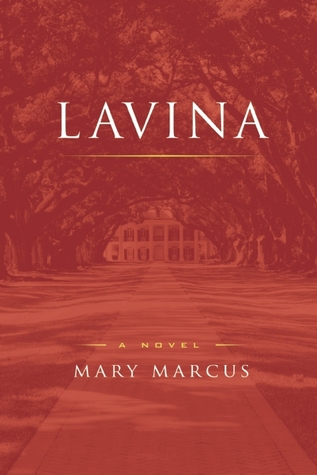
Lavina

22750229Mary Jacob grew up as an anomaly. A child of Louisiana in the early sixties, she found little in common with most of the people in her community and in her household, and her best friend was Lavina, the black woman who cooked and cleaned for her family. Now, in the early nineties, Mary Jacob has escaped her history and established a fresh, if imperfect, life for herself in New York. But when she learns of her father's critical illness, she needs to go back home. To a disapproving father and a spiteful sister. To a town decades out of alignment with Mary Jacob's new world. To the memories of Billy Ray, Lavina's son who grew up to be a musical legend whose star burned much too bright.

And to the echoes of a fateful day three decades earlier when three lives changed forever.

A decades-spanning story both intimate and enormous in scope, LAVINA is a novel rich in humanity, sharp in its indictments, and stunning in its resolution.

*May Contain Spoilers*

Lavina is a powerful novel, stretching to fill the empty spaces with a tale of hope that has no chance for a happy ending. The way the book is set up: it's like a car crash -- you can't look away once you realize what's about to happen. Lavina begins slowly with a false sense of security, the reader knows what the end will bring, but somehow, somewhere in the middle, you get lost and all of a sudden, the book is un-put-down-able and you're praying for a way to change the outcome. 

There are three main characters in this novel, with important key players along the way. Lavina was the housemaid in the 1960s (and before) for Mary's family. Billy Ray was/is Lavina's son, who once was a very famous singer and harmonica player. Mary Jacob is a children's book writer, who struggles with remembering her past, returning to Louisiana because her father is dying. Readers will feel a connection to each of these characters, but in quite different ways. Lavina is the mothering type. She worries, warns, and wipes up the mess. Readers know that Lavina is deceased, but not how it happened. Her sweet and loving personality, and the way she treats Mary Jacob, will instantly connect her with readers. 

Readers see both the child and the adult in the novel where Billy Ray and Mary Jacob are concerned. Billy Ray is a little boy who wants to be able to take care of his mother. He dreams of her quitting her job and relaxing all day while he plays music and makes enough money for the both of them. But he has a lot of anger for a young teenager. As an adult, Billy Ray has been through the ringer. He's been famous, rich, drug-addicted, in jail, and at rock bottom. Presently, sober and focused on playing his music once again, readers see the man he's become. Not the best man, but a man who wants to be better. Readers will understand through the novel's details, even if they don't agree with or particularly like Billy Ray's character. 

Mary Jacob is the hub of this story's wheel. She's the outcast of her family, the one nobody cares much about. She's lonely, but intelligent, nice, accepting, and sweet. Mary Jacob clings to Lavina because she is the only one who has ever shown Mary real unconditional love. Readers will experience Mary Jacob's nervousness at seeing her father again, understand her dislike for her snobby sister, and see what happened the summer that Mary's life changed. As an adult, Mary Jacob is a bit more complicated than her pre-teen self, married with children of her own and a career she's proud of isn't always enough to impress people you shouldn't give a damn about. The connection between readers and Mary will be the strongest of the three as she's the focus, but each character has potential, except the snobby sister Kathryn. 

The plot of Lavina is an intense string of events. In the present day, Mary Jacob is traveling to Louisiana to see her father on his deathbed. At the same time, Billy Ray is traveling back to Louisiana to play a show, kicking off his next tour. The two collide and Mary Jacob suddenly has the memories back that she had locked away so many years ago. As the memories return, the readers take the journey back to the 1960s with Mary, reliving the worst summer of her life. Mary Marcus does an astounding job in reaching out to the reader, bringing them into the story as if the characters themselves were sitting beside us, telling us everything that happened, seemingly interrupting each other and filling in details. It's quite an amazing novel, simple as that. 

Rating: 4/5 Cups