Showing posts with label andrew joyce. Show all posts

Monday, February 5, 2018

Guest Post - Andrew Joyce

What you are about to read is a true story. It’s from my book, Bedtime Stories for Grown-Ups. It came about because my editor hounded me for two years to put all my short stories into one collection. Actually, it was supposed to be a two-volume set because there was so much material. I fended her off for as long as possible. I didn’t want to do the work of editing all the stories. There were a lot of them. But she finally wore me down. Instead of two volumes, I put all the stories into a single book because I wanted to get the whole thing over with. I had other books to write.
Bedtime Stories is made up of fiction and nonfiction stories and some of ’em are about my criminal youth. I must tell you, I never thought any of these stories would see the light of day. I wrote them for myself and then forgot about them. By the way, there are all sorts of genres within its pages, from westerns to detective stories to love stories and just about anything else that you can imagine.
There are a whole lotta stories in the book—700 pages worth. Enough to keep you reading for the foreseeable future.
Here’s one of my hitching adventures. By the way, in the hitching tales, I use my real name, Billy Doyle—Andrew Joyce being my pen name.
- Andrew Joyce


Synopsis
Bedtime Stories for Grown-Ups is a jumble of genres—seven hundred pages of fiction and nonfiction … some stories included against the author’s better judgment. If he had known that one day they’d be published, he might not have been as honest when describing his past. Here is a tome of true stories about the author’s criminal and misspent youth, historical accounts of the United States when She was young, and tales of imagination encompassing every conceivable variety—all presented as though the author is sitting next to you at a bar and you’re buying the drinks as long as he keeps coming up with captivating stories to hold your interest.

Comprised of 218,000 words, you’ll have plenty to read for the foreseeable future. This is a book to have on your night table, to sample a story each night before extinguishing the lights and drifting off to a restful sleep.
Mr. Joyce sincerely hopes that you will enjoy his stories because, as he has stated, “It took a lot of living to come up with the material for some of them.”

John, Kris, and Me

It was 1968; I was eighteen-years-old, and I was hitchhiking from Miami to New York. I had gotten off the beaten track, so to speak. I should have stayed on US 301 (this was before the Interstate Highway System), but instead found myself just south of Memphis, hoping to catch a ride into Nashville by noon and then catch a long haul out of that city.
It was early morning. The traffic was light, and I wasn’t having much luck when, suddenly, a black Mustang screeched to a halt, and the guy driving leaned over and said through the open passenger-side window, “I’m headin’ to Nashville, that do you any good?”
Of course I said, “Yes,” and jumped in.
As he’s accelerating, he’s looking straight ahead, not saying anything, which is kinda strange but not unusual when you’re hitching. So I said nothing and stared out the windshield at the fast approaching skyline of Memphis. Then it hit me. I know this guy; I should have tumbled from the voice.
At that time in my life, I was not into different types of music; I liked rock n’ roll. Since then my taste in music has matured to encompass all types. But even though this guy wasn’t a rocker, I knew him and his music. A couple of his songs had crossed over and were played on the top forty stations.
The driver was intent on what he was doing, but I think he caught me looking at him out of the corner of his eye. I noticed he had a firm grip on the steering wheel, his knuckles were white. After a few minutes, he turned to me, saying, “Howdy, my name’s John.” At the same time, he raised his right hand from the wheel and stuck it out in my direction.
We shook hands, and I said, “It’s a pleasure to meet you, Mr. Cash. My name is Billy.”
Once John and I shook hands, he became more talkative. Hell, he became downright verbose. He told me about his hitchhiking adventures and asked me about mine. We were three hours out of Nashville and I don’t think there was another quiet moment for the whole three hours. We talked about life, women, and we even got into a metaphysical discussion. He told me about his army days and the time he was arrested in Texas. Just to keep even, I told him stuff that had happened to me while on the road. We didn’t talk about his music or anything like that. I’d been around enough to know that coming off as a gushing fan would have been a major turn-off for him. And besides, at the time, I was not a fan, gushing or otherwise. But by the time we hit Nashville, I was becoming a fan … of the man if not his music.
As we neared Nashville, he told me he’d just gotten married a few months back and was dying to see his wife. “I’ve been gone two days and it feels like two years,” he informed me. Then he said, “It’s about dinner time; why not stop in and get something to eat and then hit the road. June’s a great cook.”
Dinner is what country folk call lunch.
I accepted his kind offer, and we got off the highway and headed for his home, which was only a few blocks away. When we got to his house and as we were pulling into the driveway, he said, “Looks like June is out somewhere, but don’t worry, we’ll rustle somethin’ up.”
I told him not to bother, that I could cadge a meal down the line. He looked at me, shook his head, and in that deep voice, he asked me if I had any money. Of course, I didn’t and I told him so. He told me that he’d been on the road and hungry, and that if I didn’t get my butt in the house pronto, he’d drag me inside.
So in we went, and we walked right back to the kitchen. John told me to sit at the table as he opened the refrigerator and looked around for a moment before saying, “Ah ha! It’s still here.” And he pulled out a platter with a ham on it. I mean a real ham, bone and all! He also came up with a jar of mustard and a hunk of cheese. As he started to slice the ham, he told me where the bread and plates were kept and asked me to get them.
When the sandwiches were made—two of them—he asked me if I’d like a beer.
“Yes, please.”
So there I am, sitting in the kitchen of a man I’d met only a few hours before, and I’ve got two thick ham and cheese sandwiches and a can of beer in front of me. Not a bad score and the day was still young!
I asked him if he was going to eat, and he said beer would do him fine.
We’re sittin’ at the kitchen table, shooting the shit, when the doorbell rings. John gets up, but before he leaves, he takes a long swig of beer. “Be right back,” he says. A few minutes later, he comes back into the kitchen with this guy.
“Billy, I want you to meet a friend of mine. This here is Kris.”
I had my mouth filled with ham sandwich, so I mumbled a hello. He waved and smiled, “Glad to meet ya, Billy.”
John asked Kris, “How about a sandwich and a beer?”
“Just a beer, please. It’s my lunch hour, and I’ve got to get back to work. But I have a new song I’d like you to hear and see what you think of it.”
By now, I’d eaten my two sandwiches, and I had nothing to add to the conversation, so I figured I’d just finish my beer and get the hell out of there. But before I could say my thanks and hit the road, John leaves the room and returns a moment later with a guitar.
Prior to my going any further, I’ve got to lay the scene out for you. We’re sitting at a round kitchen table. To my left is John and directly opposite me is this guy, Kris Kristofferson (before he was famous). John and I were hitting our beers and watching Kris tune the guitar. Then he picked at the strings and started to sing. I don’t remember what the song was. I wasn’t really paying attention. In my mind, I was rehearsing my good-bye speech to John.
When Kris was done, we all three sat there looking at one another. I didn’t say anything because it wasn’t my opinion Kris sought. Kris didn’t say anything because he was waiting for John to say something, which he finally did.
“It’s not bad. But I don’t know if it’s for me.”
I’ve got to hand it to Kris; he smiled broadly and said, “That’s okay. I just wanted you to hear it and get your thoughts.” Then he lifted his beer and said, “Prosit.” That was my cue to leave. I stood and told John I had to hit the road. He said he’d drive me back to the highway, but I told him not to bother, he had company, and besides, it was only a few blocks away. Kris said if I could wait a few minutes, he’d drop me off at the highway on his way back to work. I declined his offer. I didn’t want to wait around. I had a full stomach and New York City was calling to me. I said my good-byes and walked out the front door, retrieved my case from the Mustang and headed off for further adventures.

Just one last thing: When I got to New York and opened my case, there was Benjamin Franklin staring up at me from on top of my clothes. John must have put the C-note in there when he went to let Kris in.


Biography
Andrew Joyce left high school at seventeen to hitchhike throughout the US, Canada, and Mexico. He wouldn't return from his journey until years later when he decided to become a writer. Joyce has written five books. His first novel, Redemption: The Further Adventures of Huck Finn and Tom Sawyer, was awarded the Editors' Choice Award for Best Western of 2013. A subsequent novel, Yellow Hair, received the Book of the Year award from Just Reviews and Best Historical Fiction of 2016 from Colleen's Book Reviews.
Joyce now lives aboard a boat in Fort Lauderdale, Florida, with his dog, Danny, where he is busy working on his next book, tentatively entitled, Mahoney: An American Story.



Thursday, October 13, 2016

History meets Fiction with Andrew Joyce

32285027My name is Andrew Joyce and I write books for a living. Tracy has been kind enough to allow me a little space on her blog to talk about my latest, Yellow Hair.
Yellow Hair documents the injustices done to the Sioux Nation from their first treaty with the United States in 1805 through Wounded Knee in 1890. Every death, murder, battle, and outrage depicted actually took place—from the first to the last. The historical figures that play a role in my story were real people and I used their real names. I conjured up my protagonist only to weave together the various events conveyed in my fact-based tale of fiction. Yellow Hair is an epic tale of adventure, family, love, and hate that spans most of the 19th century. It is American history.
The inspiration for the book came to me when I was reading a short article and it made reference to the Great Sioux Uprising of 1862. It also mentioned that the outcome involved the largest mass execution in the history of the United States. That piqued my interest.

When I started my research into the incident, one thing led to another and before I knew it, I was documenting the entire history of the Sioux, who are also known as the Dakota, vis-à-vis the relationship between them and the United States.

Because the book exists only because I read the phrase, “the largest mass execution in the history of the United States,” I’ll tell you a little about that. What follows is an extremely abbreviated version of events.

The Dakota signed their first treaty with the United States in 1805 when they sold a small portion of their land to the Americans for the purpose of building forts. It was right after the Louisiana Purchase and President Jefferson wanted a presence in the West. At the time, “the West” was anything on the western side of the Mississippi River.

In the treaty of 1805, the Dakota sold 100,000 acres to the Americans. The agreed-upon price was $2.00 per acre. But when the treaty came up before the Senate for ratification, the amount was changed to two cents per acre. That was to be a precursor for all future treaties with the Americans. There were subsequent treaties in 1815, 1825, 1832, 1837, and 1851, and basically the same thing happened with all those treaties.

In 1837, the Americans wanted an additional five million acres of Dakota land. Knowing it would be a hard sell after the way they failed to live up to the letter or spirit of the previous treaties, the government brought twenty-six Dakota chiefs to Washington to show them the might and majesty that was The United States of America.

The government proposed paying one million dollars for the acreage in installments over a twenty-year period. Part of the payment was to be in the form of farm equipment, medicine, and livestock. Intimidated, the Indians signed the treaty and went home. The United States immediately laid claim to the lands—the first payment did not arrive for a year.

The significance of the 1837 treaty lies in the fact that it was the first time “traders” were allowed to lay claim to the Indians’ payments without any proof that money was owed . . . and without consulting the Indians. Monies were subtracted from the imbursements and paid directly to the traders.

By 1851, the Americans wanted to purchase all of the Dakota’s remaining lands—twenty-five million acres. The Sioux did not want to sell, but were forced to do so with threats that the army could be sent in to take the land from them at the point of a gun if they refused the American’s offer.

“If we sell our land, where will we live?” asked the Dakota chief.

“We will set aside land for the Dakota only. It is called a reservation and it will be along both banks of the Minnesota River, twenty miles wide, ten on each side and seventy miles long,” answered the Commissioner of Indian Affairs.

The Dakota were offered six cents an acre for land that was worth at least a dollar an acre. The payment would be stretched out over a twenty year period and was to be made in the form of gold coins. One year later, in 1852, the Americans took half the reservation, the seventy miles on the north side of the river. The Dakota were now reduced from a nation of fierce, independent people to a people dependent on hand-outs from the ones who stole not only their land, but also their dignity.

The Dakota were forced to buy their food from the traders who ran trading posts at the Indian Agency the U.S. Government had set up on the reservation. All year long the Dakota would charge what they needed. When the yearly payment for their land arrived, the traders would take what they said was owed them. Subsequently, there was very little gold left for the Dakota.

By 1862, the Dakota were starving. That year’s payment was months late in arriving because of the Civil War. The traders were afraid that because of the war there would be no payment that year and cut off the Dakota’s credit. The Indian Agent had the power to force the traders to release some of the food stocks, but refused when asked to do so by the Dakota.

After they had eaten their ponies and dogs, and their babies cried out in the night from hunger, the Dakota went to war against the United States of America.

They attacked the agency first and liberated the food stock from the warehouse, killing many white people who lived there. Then bands of braves set out to loot the farms in the surrounding countryside.

Many whites were killed in the ensuing weeks. However, not all of the Dakota went to war. Many stayed on the reservation and did not pick up arms against their white neighbors. Some saved the lives of white settlers. Still, over 700 hundred whites lost their lives before the rebellion was put down.

When the dust settled, all of the Dakota—including women and children, and those people who had saved settlers’ lives—were made prisoners of war.

Three hundred and ninety-six men were singled out to stand trial before a military commission. They were each tried separately in trials that lasted only minutes. In the end, three hundred and three men were sentenced to death.

Even though he was occupied with the war, President Lincoln got involved. He reviewed all three hundred and three cases and pardoned all but thirty-eight of the prisoners.

On a gray and overcast December morning in 1862, the scaffold stood high. Thirty-eight nooses hung from its crossbeams. The mechanism for springing the thirty-eight trap doors had been tested and retested until it worked perfectly. At exactly noon, a signal was given, a lever pulled, and the largest mass execution to ever take place in the United States of America became part of our history.

- Andrew Joyce

Author Biography

Andrew Joyce
Andrew Joyce left high school at seventeen to hitchhike throughout the US, Canada, and Mexico. He wouldn’t return from his journey until decades later when he decided to become a writer. Joyce has written five books, including a two-volume collection of one hundred and fifty short stories comprised of his hitching adventures called BEDTIME STORIES FOR GROWN-UPS (as yet unpublished), and his latest novel, YELLOW HAIR. He now lives aboard a boat in Fort Lauderdale, Florida, with his dog, Danny, where he is busy working on his next book, tentatively entitled,
MICK REILLY.

Purchase Yellow Hair on:

Thursday, July 21, 2016

Meet Author Andrew Joyce - Author of Resolution: Huck Finn's Greatest Adventure

My name is Andrew Joyce, and I write books for a living. One morning, about five years ago, I went crazy. I got out of bed, went downstairs, and threw my TV out the window. Then I sat down at the computer and wrote my first short story. I threw it up on a writing site on the Internet just for the hell of it. A few months later I was notified that it was to be included in an anthology of the best short stories of 2011. I even got paid for it! I’ve been writing ever since.

Tracy has been kind enough to allow me a little space on her blog to promote my new book, RESOLUTION: Huck Finn’s Greatest Adventure, so I thought I’d tell you how it came about. It all started way back in 2012 . . .

My first book was a 164,000-word historical novel. And in the publishing world, anything over 80,000 words for a first-time author is heresy. Or so I was told time and time again when I approached an agent for representation. After two years of research and writing, and a year of trying to secure the services of an agent, I got angry. To be told that my efforts were meaningless was somewhat demoralizing to say the least. I mean, those rejections were coming from people who had never even read my book.

“So you want an 80,000-word novel?” I said to no one in particular, unless you count my dog,because he was the only one around at the time. Consequently, I decided to show them City Slickers that I could write an 80,000-word novel!

I had just  finished  reading   Mark Twain’s Huckleberry Finn for the third time, and I started thinking about what ever happened to those boys, Tom and Huck. They must have grown up, but then   what?   So   I   sat   down   at   my   computer   and   banged   out  REDEMPTION:   The   Further Adventures of Huck Finn and Tom Sawyer in two months; then sent out query letters to agents.

Less than a month later, the chairman of one of the biggest agencies in New York City emailed me that he loved the story. We signed a contract and it was off to the races, or so I thought. But then the real fun began: the serious editing. Seven months later, I gave birth to Huck and Tom as adults in the Old West. And just for the record, the final word count is 79,914. The book went onto reach #1 status in its category on Amazon (twice) and won the Editor’s Choice Award for best Western of 2013. The rest, as they say, is history.

But not quite.

My agent then wanted me to write a sequel, but I had other plans. I was in the middle of editing down my first novel (that had been rejected by 1,876,324 agents . . . or so it seemed) from 164,000 words to the present 142,000. However, he was insistent about a sequel, so I started to think about it. Now, one thing you have to understand is that I tied up all the loose ends at the end of REDEMPTION, so there was no way that I could write a sequel. And that is when Molly asked me to tell her story. Molly was a minor character that we met briefly in the first chapter of REDEMPTION, and then she is not heard from again.

So I started to think about what ever happened to her. After a bit of time—and 100,000 words—we find out what did happen to Molly. It is an adventure tale where Huck Finn weaves through the periphery of a story driven by a strong female lead. Molly Lee was my second book, which achieved #2 status on Amazon.

Now I was finished with Huck Finn and Tom Sawyer for good. Now I could go back to my first novel and resume the editing process.

But not quite.

It was then that Huck and Molly ganged up on me and demanded that I resolve their lives once and for all. It seems that I had left them hanging, so to speak. Hence,  RESOLUTION: Huck Finn’s Greatest Adventure. Here is the blurb from the back cover of the book:


There you have it. Now, if you nice people will just go out and buy  RESOLUTION, perhaps Huck and Molly will leave me alone long enough so that I can get some editing done on my first novel.

Thank you for having me over, Tracy It’s been a real pleasure.

- Andrew 


Author Bio:
Andrew Joyce left high school at seventeen to hitchhike throughout the US, Canada, and Mexico. He wouldn’t return from his journey until decades later when he decided to become a writer. Joyce has written four books, including a two-volume collection of one hundred and forty short stories comprised of his hitching adventures called BEDTIME STORIES FOR GROWN-UPS (as yet unpublished), and his latest novel, RESOLUTION. He now lives aboard a boat in Fort Lauderdale, Florida, with his dog, Danny, where he is busy working on his next book, YELLOW HAIR.


Buy Resolution on:

Saturday, October 3, 2015

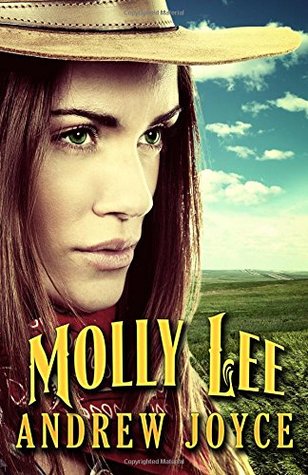
Molly Lee

25320566Molly is about to set off on the adventure of a lifetime . . . of two lifetimes.

It’s 1861 and the Civil War has just started. Molly is an eighteen-year-old girl living on her family’s farm in Virginia when two deserters from the Southern Cause enter her life. One of them—a twenty-four-year-old Huck Finn—ends up saving her virtue, if not her life.

Molly is so enamored with Huck, she wants to run away with him. But Huck has other plans and is gone the next morning before she awakens. Thus starts a sequence of events that leads Molly into adventure after adventure; most of them not so nice.

We follow the travails of Molly Lee, starting when she is eighteen and ending when she is fifty-six. Even then Life has one more surprise in store for her.

*May Contain Spoilers*

Life in the 1860s is nothing if not full of adventure, danger, and the realization of your own mortality. Molly Lee by Andrew Joyce follows the wanderings of one woman as she sets out on her own, with no idea what that might mean, in search of a young man named Huck Finn. 

Molly Lee begins the novel as a young, doe-eyed, naive girl, but is quickly introduced to the dangers of reality. She grows into a no-nonsense woman who knows that she can't rely on anybody but herself. Molly is brave, sharp tongued, and a survivor. In the 1860s, it seems you either had to be willing to kill or be killed and Molly knew how to protect herself. Though she also has a softer side. Molly is loving, loyal, respectful, and dutiful woman. She falls in love, takes on the role of stepmother, and even helps protect an Indian Tribe. Molly is definitely a well-rounded character, with good and bad characteristics. Readers will connect with Molly as the glitter of adventure wears off and reality settles in. Her feisty attitude and lovingness will win over readers as they share in her journey. 

Huck Finn is the beginning of this story. Molly Lee meets him after Huck helps save the livelihood of her family. Love at first sight sends Molly to chase Mr. Finn though it doesn't seem to be written in the stars for him and Molly. As Molly travels around the country, whether by interest or force, readers witness how different life was in the 1860s. Though the story was intriguing, it took me a while to get used to Joyce's writing style. It's very cut and dry without a lot of fluff. Joyce is a writer who gets straight to the point in telling the story and this makes the book a pretty easy read. However, it still seemed a bit long-winded. Maybe because so much happens to Miss Molly that I started to think there would never be a happy ending. Chapters are relatively short and each seems to be a new adventure for Molly Lee but the surprise factor wears off after the first few bouts of bad luck. 

Rating: 3/5 Cups

Tuesday, September 29, 2015

Teaser Tuesday (181)

TeaserTuesdays2014e

Teaser Tuesdays is a weekly bookish meme, hosted by MizB of A Daily Rhythm. Anyone can play along! Just do the following:
• Grab your current read
• Open to a random page
• Share two (2) “teaser” sentences from somewhere on that page
• BE CAREFUL NOT TO INCLUDE SPOILERS! (make sure that what you share doesn’t give too much away! You don’t want to ruin the book for others!)
• Share the title & author, too, so that other TT participants can add the book to their TBR Lists if they like your teasers

25320566

Molly Lee (32% on Kindle)
   - Andrew Joyce

"Huck? That's a strange name for a horse."
"He's named for a friend of mine."
"I only asked because the best dang sheriff we ever had was named Huck. Huck Finn was his name."