Showing posts with label friendship. Show all posts

Friday, May 11, 2018

Fallout Girl (Hollywood Lights #5)

38205327The day she buries her mother, Miranda George jumps on a plane from North Carolina, telling no one where she’s heading. She wants to disappear and start over. She arrives on the Los Angeles doorstep of college friend Daphne Saito, and even though Miranda hasn’t seen Daphne in years, Daphne welcomes Miranda into her home and her makeshift L.A. family.

The problem is, Miranda is on the run from family. All family. Family, in Miranda’s experience, can get you killed.

Miranda takes off again, but this time her plan is much more sinister. She certainly doesn’t expect her friends to track her down. When they bring her back from the edge, the question remains: will Miranda be able to save herself and her newfound friendships? Or will she remain strangled by the past?

*May Contain Spoilers*

Fallout Girl, by Katie Rose Guest Pryal, introduces a strong female lead who suffers from a mental illness to the series and to the group of Hollywood friends. Miranda George was raised by a mother suffering from bipolar disorder and is now aware that she, too, has the mental illness. With firsthand experience from trying to care for her mother, Miranda is determined to stop her illness from hurting anyone she cares about, but that doesn't include herself. 

Miranda is portrayed as a blunt, brutally honest, and incredibly intelligent young woman. However, her bipolar disorder also makes her reckless, overly adventurous, and prone to push people away. When she arrived in L.A., Miranda thought she was escaping to an old college acquaintance who wouldn't care enough to try to save her. Luckily, she was way off base. Miranda, instead, finds a group of people who are caring, loyal, and willing to accept her as a friend. Through these personality traits and the events of the book, readers will, without a doubt, connect with Miranda. Though her mental illness isn't discussed at length, the author demonstrates the symptoms through Miranda's actions. This gives readers an in-depth, realistic look at bipolar disorder and how it can affect those who have it. Readers will not only understand why Miranda is acting the way she is, they'll witness moments when her mental illness takes over. With that kind of openness, readers will form a strong bond with Miranda and want her to heal as the book continues. 

The plot of the novel begins after Miranda has already arrived in L.A., where the series takes place. Miranda is determined to escape her mental illness using drugs, danger, and sex while she forms a plan to take her own life. Yet, the people she meets while crashing at Daphne's apartment (an old acquaintance from college) begin to care about Miranda and notice that something is happening to her. With good intentions and help from Miranda's brother, the group tries to help Miranda accept her mental illness and move toward a life that allows her to control it. 

Though Fallout Girl has a very serious storyline, it is an incredibly entertaining and interesting book. The mental illness aspect is represented as realistically as it can be while still allowing the book to have an enjoyable air. There is a romantic aspect of the book that will also have readers cheering for Miranda, even though her destructive nature threatens her chance at a relationship multiple times. With various layers of interaction, shifting point of views, and serious undertones, Fallout Girl is a book that seriously represents living with bipolar disorder and presenting friendships that grow and evolve with the people who are a part of them. 

Rating: 4/5 Cups

Monday, August 21, 2017

Marlena

30199414Everything about fifteen-year-old Cat’s new town in rural Michigan is lonely and off-kilter, until she meets her neighbor, the manic, beautiful, pill-popping Marlena. Cat, inexperienced and desperate for connection, is quickly lured into Marlena’s orbit by little more than an arched eyebrow and a shake of white-blond hair. As the two girls turn the untamed landscape of their desolate small town into a kind of playground, Cat catalogues a litany of firsts—first drink, first cigarette, first kiss—while Marlena’s habits harden and calcify. Within the year, Marlena is dead, drowned in six inches of icy water in the woods nearby. Now, decades later, when a ghost from that pivotal year surfaces unexpectedly, Cat must try to forgive herself and move on, even as the memory of Marlena keeps her tangled in the past.
*May Contain Spoilers*

Life as a teenager is nearly always rough. A time of self-exploration, a time of mistakes, and sometimes the beginning of something that stays with us forever. Marlena, by Julie Buntin, explores these themes, coupled with addiction, alcoholism, and the haunting nature of memory. As Cat recounts a year of her life with imperfect hindsight, readers are taken down a horrifying, blunt, and, at times, crude memory lane where the end result is always the same: Marlena is dead.

The aspect of Cat's character that struck me as the most important in regard to the story is her unreliable nature. After her parents' divorce and her move to rural Silver Lake, Cat met Marlena and started drinking at the age of fifteen. She openly admits repeatedly throughout the novel that her memory isn't perfect, it's scarred and blurred with drugs and alcohol. At one point, she even admits to omitting things, casting Marlena in an ethereal, angelic light, even though she was a bad influence as well as a suffering young woman. One paragraph hit me in particular, blatantly telling me that Cat as a narrator is not to be trusted: 
The truth is both a vast wilderness and the tiniest space you can imagine. It's between me and her, what I saw and what she saw and how I see it now and how she has no now. Divide it further---between what I mean and what I say, who I am and who I appear to be, who she said she was and acted like she was and also, of course, who she really was... Imagine all these perspectives like circles in a Venn diagram, a tiny period in the middle... Maybe that is the truth. But my version of the story is all we f*cking get (Buntin 231). 
With this admission, readers see Cat as not only unreliable but self-deprecating. Cat doesn't trust herself, therefore she doesn't inspire much trust from her readers. And yet, we believe her. The story is so intoxicating and absorbing that we ignore her misgivings. We ignore her warnings and try to see the truth behind the inconsistency of her memory. Cat plays to the reader so that we both understand her and Marlena. We see the struggle Cat has with her parent's divorce and how she loses interest in success and all she can think about is escape. I even think we recognize that as a feeling we've experienced. And in this, Marlena becomes a myth-like figure, a warning, an inspiration. Chaotically beautiful in her own destruction. All of this culminates in a pulling, a luring, in of the reader. Fed by the storyline and the prematurely revealed ending that Marlena is dead.

Through these recognizable, understandable, and emotional characteristics of Cat, readers are immediately drawn to her. She's a struggling adult who suffered physically and emotionally as a teenager, though much of it was self-inflicted. However, there are no feelings of blame elicited from the book. I didn't blame Cat's parents, Marlena, or Cat herself, which I found very interesting. Well, maybe I blamed Cat's dad a little bit... but still. The writing style of Buntin leaves room for reader interpretation and I love when a book does that.

The real hook for me in regard to the plot is that Cat has no idea what really happened with Marlena's death. The storyline follows Cat's family moving to Silver Lake, Cat meeting Marlena, the next door neighbor, and then falling down this rabbit hole of destruction that led to Marlena's death. The whole book seems to revolve around a promise Cat made to never forget Marlena and that has haunted her for the past fifteen plus years. Readers truly see how much Marlena's friendship and death affected Cat so that Marlena's memory became her albatross. Marlena is truly a book that haunts, a book that forces a change of perspective, a jaunt down memory lane that scars and blurs the surrounding landscape and especially a book that questions the reliability of memory. I would recommend Marlena to readers who enjoy unsolved mysteries, the exploration of friendship and relationships and those who don't inch away from danger and dirty secrets.

Rating: 3.5/5 Cups

Thursday, June 15, 2017

The Grumpface

34546012The Grumpface is a poetic fairy-tale that tells the story of Dan, an inventor who ventures into a forest looking for a rose. Instead he finds the mysterious Grumpface who threatens to hold him captive unless he passes some difficult challenges. What follows is a humorous adventure that neither Dan nor the Grumpface could have anticipated.

The Grumpface is a tale in the spirit of any grand adventure. It is about a clumsy young inventor's quest for love and the challenges he must face to find it. It is also a tale of bravery, absurdity and happiness, and the power of these qualities over negativity and sheer grumpiness.

Every parent will be acquainted with their own little 'grumpface' now and then. This story stands as a small piece of hope - that no matter how ingrained the grump, there will always remain in every one of us a smile or a laugh just waiting to come out.

**

The Grumpface by BCR Fegan was a very enjoyable children's book! I always read children's books out loud, to get the sense of how they hear as well as how they read, and this book is perfect for reading aloud. It has a great rhyme scheme with a nice mix of vocabulary. The story itself follows Dan the Inventor on a journey to find a rose when he gets lost and stumbles upon Grumpface. 

Dan is a creative main character who carries little inventions around with him. Most importantly, he's nice to the Grumpface even when the goblin-like creature threatens him with being trapped in the forest forever. When the Grumpface sets tasks for Dan and they aren't as easy as Dan believed, he doesn't get frustrated or upset; he just believes he'll do better on the next task. I think how Dan reacts throughout the storybook is a really good example of how to react when facing difficult challenges. To children, this will help solidify the idea that giving up or getting mad isn't the best reaction when things don't go your way. 

The Grumpface, though, a little mean at the start, is more of a likeable villain. As Dan attempts each task set before him, the Grumpface starts to smile a little more. I like how this demonstrates that any anger can be overcome and with children I'm sure this would be a good talking point when it comes to meeting new people. Just because they seem grumpy doesn't mean that they're actually mean people. I feel like it also promotes giving people a chance before judging them as Dan ends up helping Grumpface make his own big change at the end of the book.

With two nice main themes that jump out and a great poetic style, I think The Grumpface is a really good book for elementary school children. 

Rating: 4/5 Cups

Friday, August 5, 2016

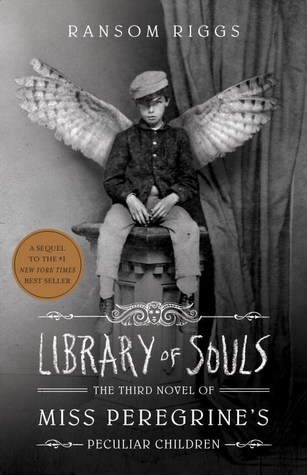
Library of Souls (Miss Peregrine's Peculiar Children #3)

24120519A boy with extraordinary powers. An army of deadly monsters. An epic battle for the future of peculiardom.

The adventure that began with Miss Peregrine’s Home for Peculiar Children and continued in Hollow City comes to a thrilling conclusion with Library of Souls. As the story opens, sixteen-year-old Jacob discovers a powerful new ability, and soon he’s diving through history to rescue his peculiar companions from a heavily guarded fortress. Accompanying Jacob on his journey are Emma Bloom, a girl with fire at her fingertips, and Addison MacHenry, a dog with a nose for sniffing out lost children.

They’ll travel from modern-day London to the labyrinthine alleys of Devil’s Acre, the most wretched slum in all of Victorian England. It’s a place where the fate of peculiar children everywhere will be decided once and for all. Like its predecessors, Library of Souls blends thrilling fantasy with never-before-published vintage photography to create a one-of-a-kind reading experience.

*May Contain Spoilers*

An absolutely brilliant end to Miss Peregrine's Peculiar Children series, Library of Souls by Ransom Riggs is a work of written art. His poetic prose and descriptive nature paints a world in the minds of readers. A world they can't see because they aren't peculiar, but a world that lives along side ours, just the same.

Jacob Portman had just been briefly introduced to a new detail of his peculiar ability in Hollow City: he can speak in Hollowspeak, which is the language of Hollogasts, evil invisible monsters with superior strength. In the opening of this third book, Jacob realizes that he can use the language to control the monsters. Throughout the novel, his knowledge of the language, how to use it, and how to make it work evolve. This seemingly small accomplishment is the key to the survival of the peculiar children. With this talent, Jacob becomes the heroic figure of this epic tale. He describes himself as the new Jacob. A young man who is brave, courageous, loyal, and a leader. Readers will undoubtedly feel connected to Jacob as they've traversed the peculiar world with him through the previous two books. The horrors and betrayals that he has faced, and overcome, will allow readers to believe in future success. However, the odds are not in Jacob's favor without ymbryne help or any other peculiar children. Jacob and Emma must push to find their loved ones while fighting for survival and battling wights and Hollogasts. The reality is that they most likely will fail and this fact has readers hoping beyond hope that a miracle will happen. After all, we haven't committed to the series to watch our heroes die in battle. 

The plot is a complicated twist of loops, successes, and failures. It begins at the same moment Hollow City ended, with Jacob and Emma trying to escape from a Hollogast. They end up in present day London during a Comic-Con where they are able to hide in the crowds and escape the wights. Addison, the daring dog, tracks the scented trail of their peculiar friends and they are all introduced to Sharon, a man who looks like a grim reaper. Sharon agrees to take them to Devil's Acre where they believe Caul to be hiding. Things get tricky as they are met with Ambrosia users --- a drug that enhances peculiar abilities before robbing the body of it's own peculiarity. During all of this adventuring, readers will be pulled even tighter into the story as they witness how persistent and focused Emma and Jacob are. They know that there's a chance they'll never leave Devil's Acre, a chance that no one will, but they continue forward because they're wonderfully loyal friends with hearts full of love for their fellow peculiars. The battle eventually begins and Caul's plans are fully revealed: he wants to visit the Library of Souls so he can consume another peculiar soul and become the King of Peculiardom. The Library of Souls itself is a believed myth among peculiars, but the place does exist and houses thousands of old souls. And Jacob is the key to Caul's success.

I don't want to give away the ending, because it's been a long time coming for readers of Ransom Riggs. I do want to say that this ending does not disappoint, no matter how sad it is that the series is at it's official end. Library of Souls was everything I wanted it to be: satisfying, fantastical, and full of peculiarities. The photos that Riggs chose to accompany his work were perfection. I have always been mystified with the strangeness of the old pictures that exist out there in the world (though Riggs does admit a few were altered). 

For all of you who have read Miss Peregrine's Peculiar Children series, I'm glad we've all reached this point together. I can't wait to reread them all, one day soon, and relive the wonderfulness of peculiarity. And for those of you who have yet to read them: do it as soon as you can. You won't be disappointed. The world that Riggs created is amazing and astounding, full of love, friendship, family, good and evil, wars, history, supernatural aspects, and more. 

Here's looking forward to whatever Ransom Riggs comes up with next. 

Rating: 4.5/5 Cups

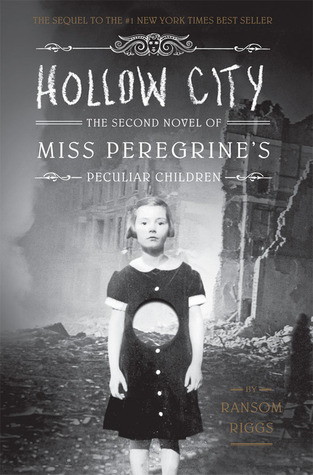
Miss out on the first two book reviews? Check them out below:

Miss Peregrine's Home for Peculiar Children (Miss Peregrine, #1)     12396528

Tuesday, January 26, 2016

The Gravity-Assist Technique

25636482Ella was just taking the dog to the woods. She didn’t intend on becoming a peeper, and she couldn’t foresee how it would alter everything, especially her friendship with Kevin.
In 'The Gravity-Assist Technique', Ella and Kevin each tell the story of their past, and map the small decisions and unintended consequences that led from then to now. It is a story about friends, family, loss, love, trust, and how our individual choices affect each other's lives.


*May Contain Spoilers*
 
As I understood it, The Gravity-Assist Technique is a complex calculation that uses gravity of other planets to project a satellite into a specific direction. That idea is adapted by Dalene Flannigan and transposed onto the characters in her novel named after the phenomenon. After her husband dies, Ella is lost. Slowly over the course of three years, she comes back to herself. But, tragedy is random and it can strike more than once in different forms.
 
Ella and Kevin take turns playing narrator in The Gravity-Assist Technique. Ella is a 43 year-old woman who suffered the tragic loss of her husband to a car accident. Her daughter is off to college and she suddenly finds herself alone. The loss that Ella has already experienced will immediately draw readers to her side. They'll understand and empathize with her plight. Ella is a strong woman who fights to keep the darkness at bay. She's hopeful for the future, insistent on becoming a whole person again.
 
Kevin is the cousin and best friend of Ella's deceased husband, Aaron, and he has always been in love with her. After Aaron's death, Kevin focuses on providing Ella with all the help she could possibly need. Lost in his focus to take care of Ella, Kevin moves away from his wife. Though readers will understand the necessary business after a death, they will also understand the hurt and abandonment that his wife, Beth, is feeling. Kevin is a good man. He doesn't lie. He doesn't cheat. Though readers won't truly begin to connect to him until they know the details of his love and support for Ella and see that without a little 'gravity-assist' he would forever stay dedicated to his wife.
 
Blame is a fickle concept and Dalene Flannigan makes it tough on readers to cast it. Which, of course, makes for a very interesting story. One afternoon is all it takes to turn a life upside down. When Ella takes her daughter's dog for a walk and spots Kevin's wife and a  strange man kissing on the back patio of a beautiful house near her own, she is mortified. She begins to think that Beth simply had a slip, made a mistake and stumbled but would find her way back to Kevin. When Beth reveals that she is pregnant, Ella begins to doubt everything that Beth says. What if it isn't Kevin's child? Then a lightning bolt strikes and Ella realizes that she's in love with Kevin. She can't say anything, of course she can't. But are her hands truly tied? Flannigan takes readers on a travel from loss to love, using The Gravity-Assist Technique to propel characters toward their fated destination.


Rating: 4/5 Cups
 

Thursday, January 22, 2015

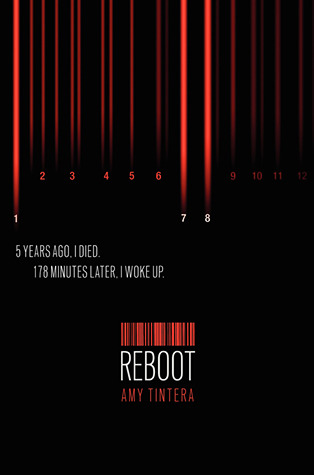
Reboot

13517455Five years ago, Wren Connolly was shot three times in the chest. After 178 minutes she came back as a Reboot: stronger, faster, able to heal, and less emotional. The longer Reboots are dead, the less human they are when they return. Wren 178 is the deadliest Reboot in the Republic of Texas. Now seventeen years old, she serves as a soldier for HARC (Human Advancement and Repopulation Corporation).

Wren’s favorite part of the job is training new Reboots, but her latest newbie is the worst she’s ever seen. As a 22, Callum Reyes is practically human. His reflexes are too slow, he’s always asking questions, and his ever-present smile is freaking her out. Yet there’s something about him she can’t ignore. When Callum refuses to follow an order, Wren is given one last chance to get him in line—or she’ll have to eliminate him. Wren has never disobeyed before and knows if she does, she’ll be eliminated, too. But she has also never felt as alive as she does around Callum.

The perfect soldier is done taking orders.

*May Contain Spoilers*

Amy Tintera presents readers with a new spin on the zombie genre in her novel, Reboot. Instead of brain eating, flesh-dripping monsters, there are Reboots. With a slight deathish twinge about them, Reboots are the same but with a little less emotion and maybe a mortal scar. 

At the Rosa facility, Wren 178 is feared. She has the highest number in the entire facility because she was officially deceased for the longest amount of time. Higher numbers are considered the more lethal members of the Reboot race. Readers get to see two sides of Wren in this novel. The first side is the Wren that follows orders. She understands that if she starts asking questions, disobeying, or messing up in any way then her life is over. Wren is a bit of a loner who believes what she's told. Readers will like Wren because of the way her character is written, but forming a connection with her doesn't start until Callum shows up. 

Callum was only dead for twenty-two minutes. Not a long time for his body to accept that it has moved on to the after-living party. He is a very likeable character - full of spunk, easy to laugh, and interested in the how and why. Callum immediately forms a weary friendship with Wren and she struggles to accept the fact that she likes him and his company. When his Reboot status is up for debate against a quick elimination, Wren chooses her friend over the rules. At this point, readers will truly connect with Wren, after her stone cold mask begins to crack. Her brief history as an alive human will garner sympathy while her focus on keeping Callum alive will solidify the bond between her and readers. 

The plot of the book is deliciously adventurous. Wren works at a facility as a sort of Reboot Criminal Officer. Basically, she and others are sent out to capture the criminal or ill humans to protect the rest of the human population. Wren is incredibly good at her job. Some would say she's the best. Then Callum shows up for training and changes everything. Her eyes open and Wren starts to see her world as it really is: a prison full of secret testing, threats, and elimination. To save Callum's life, Wren knows he can't stay at the Rosa facility and decides to do whatever it takes to escape. Readers who enjoy love stories, zombies, and adventure will certainly devour this book. 

Rating: 4.5/5 Cups

Thursday, September 25, 2014

The Secrets of Peaches

After a magical summer living on a peach orchard, Murphy, Leeda, and Birdie confront a series of breakups, make-ups, and take-offs. They may have to leave one another, along with the orchard that brought them together. But despite their heartbreak, this year's bitter endings could lead to the sweetest of new beginnings.

*May Contain Spoilers*

Jodi Lynn Anderson continues the story of three teenage peaches after the season has ended in The Secrets of Peaches, sequel to Peaches. After establishing a connection with Leeda, Birdie, and Murphy in the first novel, readers witness what happens after the magic of summer has dissipated. 

Leeda further attempts to discover just exactly who she is as senior year of high school begins. After giving up her boyfriend and being manipulated and let down by her mother, Leeda is determined to find out what she wants and go for it. Readers will enter melancholy with Leeda as she lets go of her old self to make room inside for her real personality to surface. Though it's a sad year for Leeda, readers will connect further with her and her new ambitions, anger, and decision to stop putting up with so much B.S. 

Birdie, still my favorite character, experiences a variety of adult actions and situations that she doesn't know if she's ready for. Birdie has her first intimate experience with her boyfriend, Enrico, and readers watch her deal with the unexpected feelings and worries that it brings about. This makes the reader-character relationship much more personal, thickening the bond into more of a friendship. 

Murphy, the rebel, is dating Rex and applying to NYU so she can escape the small Georgia town. When she gets accepted, Murphy lies, pretending that she was rejected. Throughout the novel, Murphy examines the surprising importance of the relationships she has in Bridgewater. Readers watch as Murphy faces her fears of the future and the unknown. 

With all of the "growing-up" stuff that the three main characters experience, it's hard not to connect with them. The emotional level of the book was heavy in sadness and worry,which transfers to the reader when connections are well established. With another novel waiting to wrap up the story of these peaches, readers will definitely care enough to see how it ends.

Rating: 3.5/5 Cups

Saturday, February 11, 2012

The Choice of Love

Where does the line of friendship end and love begin?

As people with haunted pasts, we can sometimes be wary when it comes to stepping across the threshold of friendship and into the room of full fledged love. That is exactly what makes Tessa such an intriguing character and one that any reader can relate to in A Previous Engagement by Stephanie Haddad.

The choice between friendship and love, in fiction, is often just that, a choice. When it comes to reality, do we all face the same simple choice of allowing love to flood our hearts? It's a tough call to make, a tough decision and belief to stand behind. Especially when all of the other things in our life stack up against it. Career, future plans, what we think we want. The list is endless.

Haddad does an excellent job including these things in her well-penned love story. It's as close to reality as a romantic fiction novel could be and I was taken in by the struggle Tessa faces when it comes to love or the original plan she had for her life.

But is falling in love just a choice, or something more?
A Previous Engagement on Amazon
rating: 3/5 cups

Thursday, September 15, 2011

Introduction to The Help

Kathryn Stockett's The Help is written in first person taking the point of view of three main characters in the first six chapters of the novel. Three women from very different backgrounds who each have their own opinions on life in Jackson, Mississippi.

Aibileen works for Miss Leefolt as her housemaid and raises her daughter Mae Mobley. Aibileen questions why her employer refuses to acknowledge her child, Mae. She leaves everything to Aibileen, ignoring every tear and scream. When Miss Hilly, one of Miss Leefolt's best friends, uncomfortably has to use the same bathroom as the maid the incandescent light dims on the hope of being equally treated.

Minny works as a cook and is renowned as the best in the city of Jackson. Her sharp tongue threatens unemployment but the daughter of her employer brings the threat to life. Accused of stealing, Minny is fired from her cooking job. Struggling to support her family, she finds a job teaching Miss Celia how to cook while also cleaning her house. Only one stipulation - Miss Celia's husband cannot learn of Minny's employment. Minny begins to question this as Miss Celia turns out to be a strange woman. Seeming to be agoraphobic, Miss Celia will not leave the house. Some days she doesn't even get out of bed. Stockett piques the interest of readers with the mystery that surrounds Miss Celia and what Minny will put with for more than decent pay.

Miss Skeeter is a childhood friend of Miss Leefolt and has just returned to Jackson from college. She longs for a writing job and after an inspiring letter from a respected editor applies to the Jackson Journal, writing a cleaning column. One problem, she's never cleaned anything in her life. This pushes Miss Skeeter to form a unexpected friendship with the maids because they help her writer her column. Could this lead to a topic that turns the heads of editors?

With only one hundred pages under my belt, I find myself carrying the novel everywhere with me hoping that I get a chance to read just one more page. If you have one more slot open on your reading list, jot this one down, bump it up to number one, and read it with me.