Showing posts with label morality. Show all posts

Sunday, October 8, 2017

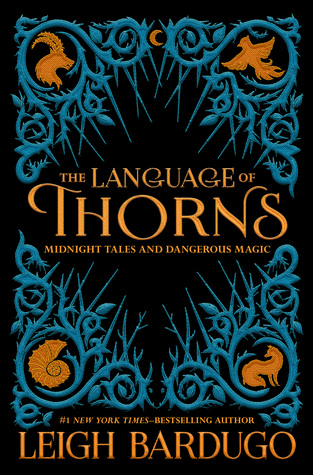
Short Story Sunday - The Language of Thorns #2

34076952
The Too-Clever Fox


In this short story, all of the animals of the forest can speak, and though they are distinguished as prey and predator, they must come together to face a previously unstoppable hunter.


Koja is the main character of this story and though he's ugly his name means handsome. He's a clever fox that is always escaping death. Koja uses his words to trick his predators and his words and wit become his symbol for hope. This brings a major theme into this short story. As long as the fox has a voice, he has hope.

The fox becomes friends with a bear, Ivan, after outsmarting him to keep his life. But, his friend is lost when a dangerous hunter comes to the woods. Koja becomes focused on stopping this hunter and he dedicates his mind to doing so. To achieve this, the fox doesn't let fear cloud his logic and he notices that the hunter's sister, Sofiya, may be the key to learning more about the hunter. As Koja studies Sofiya, he observes that she seems sad and unhappy to be the bearer of the trophies her brother kills, in the form of a coat made of animal hides. Koja approaches Sofiya and slowly becomes her ally against her brother.

She tells the fox of a charm her brother always wears and they devise a plan to steal it. Yet, when she is successful, Koja learns that he has been tricked by a pretty face and a pair of sad eyes. Before he dies, Koja uses his voice to cry out, calling his friend the nightingale to come. She blinds Sofiya and saves Koja, ending the reign of the true hunter and freeing Sofiya's brother from her malevolence.


As a reader, when Sofiya's trap is revealed, there's a sense of betrayal and a tone of deceit. Just as Koja had, readers trust Sofiya because of the very characteristics that tricked the too-clever fox. This echoes a theme from the first story in the book, that beauty can be deceptive and we can't rely on how we see people when it comes to trusting them. However, it also demonstrates how people, or animals, come together when there is a greater threat to their way of life. The prey and predators of the forest all became prey at the hands of the Huntress. This shifted the laws of the forest and put all of the animals on the same side, knowing that they had to face this threat together. Finally, this story also shows that the lowest member of society can be brave and helpful in times of trouble. Just as the unloved child saves the town in "Ayama and the Thorn Wood", Koja saves the forest even though he was born a runt. By demonstrating these themes in this specific way, they become powerful tools that save those who use them and Bardugo uses these themes to share larger moral messages that translate to contemporary society.

Next Story: The Witch of Duva 
 

Sunday, October 1, 2017

Short Story Sunday - The Language of Thorns #1


34076952

Ayama and the Thorn Wood


A monstrous son is born. A king builds a maze to keep him trapped. Yet, he escapes. 

The village people suffer and no one is able to stop the monster.

A family ashamed of one of their daughters sends her to be a messenger with the beast in hopes that they'll become rich and the monster will stop terrorizing the town, or at least be rid of their daughter.

Ayama is the main character of this opening short story of The Language of Thorns. She's a girl who wasn't born as beautiful as her sister and is therefore ostracized by her family. She is treated like a servant, forced to sleep in the kitchen, covered in ash and responsible for all of the chores. She's silenced by her family until she almost forgets how to speak. Yet, she's the only one in the village who will try to face the beast, speak to him, and try to save the town. It's when she reaches the monster that her voice is revealed, as well as her sharp tongue, quick wit, and honesty. The fact that these character traits are all revealed under duress show Ayama's bravery and courage. It also shows that these traits can be found in unexpected people. It reminds me of the old adage, don't judge a book by its cover. Because we can't judge a person based on their looks. It's their personality, their characteristics that matter. Just as Ayama proves in this short tale. 

When she arrives at the wood, the beast demands she tell him a story in exchange for her life. She adds truth to a fairy tale and he lets her leave unharmed, promising to leave the town's livestock alone. Her family is rewarded but Ayama is still treated like a servant. No one cares about her, only about their own freedom from the monster. Until it seems that he has returned to continue his terrorizing. So Ayama is once again sent to the woods.  

She once again must trade a story for her life. She again adds truth to a fairy tale and survives, saving the village yet again. A village that didn't care for her. A village that was too afraid to face the monster a young girl could face. But saving the village wasn't enough for the King. He sent her back to the monster with a specially crafted knife with orders to kill him. Ayama returns and tells him another story and she finds out the truth behind the King's accusations and the village's torment. 


In the end, truth prevails and the true monsters of the story are punished while those who look like monsters, but aren't, are rewarded. This opening tale of The Language of Thorns sets the tone for this collection of short stories as honest and representative of the cruelty sometimes found in leadership, the selfish nature of humanity, and that things aren't always as they appear. Though this story had a happy ending, we'll see if that continues over the next few weeks. The power of this opening story has me really excited to see what power the following stories have. 

My favorite part about this short story is that Ayama saves her own life by telling a story, a fairy tale, but with truth added to it. And by truth, I mean realistic outcomes. She removes (part of) the fantasy of the fairy tale and exchanges it for something she has learned from her own life. This adds a sadness to the story but also twists it to make it true for the monster. This act gives the story, and the art of storytelling, power. It demonstrates that sometimes storytelling, or sharing, can provide peace and save a life. 


Next Week: "The Too-Clever Fox" 

Monday, October 10, 2011

A Price too High?

Hadrian St. Claire needs money. 500 pounds or death, promised by those he is indebted to. Two weeks to come up with the money and no prospective photography jobs.

Until a strange man walks into his photography shop and wants to hire him for 5000 pounds. More than enough to pay his debt. The job? Take a nude photograph of Caledonia Rivers, the leader of a women's suffrage group who is highly renowned for her maidenhood, in order to stop her bill in Parliament. Blacken her reputation and remove the threat of women voting.

Caledonia, beautiful, vulnerable, intriguing. When Hadrian first set eyes on her his heart was warmed. A warmth  that he had never known before. A simple skipped heart beat and he can't wait to see her again. And then this offer...

Will Hadrian accept the 5000 pounds in order to ruin Caledonia's reputation and clear his name in the streets of England? Or is the price too high to accept this unmoral task?

Hope Tarr's novel, Vanquished, creates a heavy dilemma that will force readers to question their own morality and how far they would go to ensure their own survival.